


 Click it and Unblock the Notifications
Intel Core Ultra 7 270K Plus Review: A Multi-core Monster That’s Great for Gaming and Even Better for Work

We recently put the Intel Core Ultra 5 250K Plus through its paces, and the results were a big step forward in terms of gaming and productivity. Building on that experience, we turned our attention to the more powerful Intel Core Ultra 7 270K Plus to see whether it could deliver the performance enthusiasts, gamers, and content creators expect from a higher-tier desktop processor.
Positioned as a premium offering in Intel's latest lineup, the Core Ultra 7 270K Plus promises faster clock speeds, improved multi-core performance, and better efficiency across demanding workloads. But does it justify its place in a modern gaming PC? Here's our detailed review of the Intel Core Ultra 7 270K Plus.

Intel Core Ultra 7 270K Plus Review: Two-Minute Review
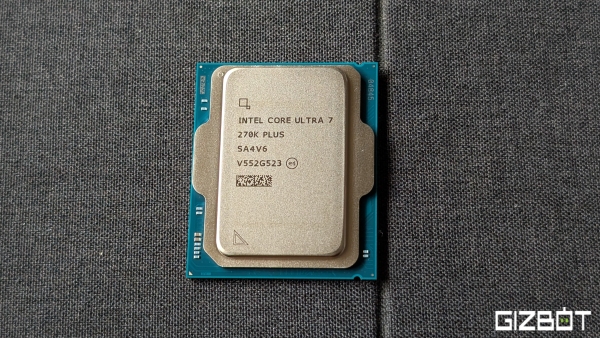
The Intel Core Ultra 7 270K Plus is designed for enthusiasts who need strong gaming and productivity performance from a single processor. Based on Intel's Arrow Lake architecture, it combines high clock speeds, a 24-thread hybrid design, and improved memory support to tackle demanding workloads.
- 8 Performance cores and 16 Efficient cores deliver excellent multi-threaded performance.
- Strong Cinebench, Geekbench, and Blender results place it ahead of competing Ryzen 7 processors in productivity tasks.
- Native DDR5-7200 support helps maximize memory bandwidth for demanding applications.
- Handles content creation, rendering, video editing, and multitasking with ease.
- Improved interconnect and cache speeds boost overall responsiveness.
- Remains competitive in single-core workloads while excelling in heavily threaded applications.
The Core Ultra 7 270K Plus is a powerful desktop processor that balances gaming performance with exceptional creator-focused capabilities, making it a compelling option for users who demand more than just high frame rates.
Intel Core Ultra 7 270K Plus Review: Build Quality
To evaluate the gaming and productivity capabilities of the Intel Core Ultra 7 270K Plus, we paired the processor with a high-performance test platform designed to eliminate potential bottlenecks and showcase its full potential. The system combines fast DDR5 memory, a capable B860 motherboard, and Nvidia's latest GeForce RTX 5070 Ti graphics card, creating an ideal environment for both synthetic benchmarks and real-world workloads.
Test System Specifications:
- Intel Core Ultra 7 270K Plus Processor
- INNO3D GeForce RTX 5070 Ti X3 16GB GDDR7 Graphics Card
- 32GB G.Skill Trident Z5 DDR5-7200 Memory
- Western Digital Blue SN570 1TB M.2 NVMe SSD
- Colorful Battle NX B860M-Plus Wi-Fi Motherboard
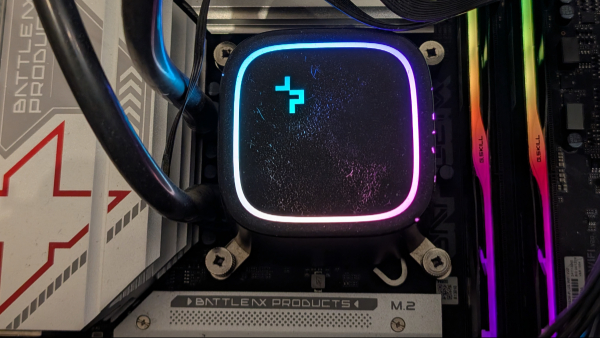
- DeepCool LE500 240mm AIO Liquid CPU Cooler
- GIGABYTE GP-P850GM 850W Modular Power Supply
A key component of the setup is the Colorful Battle NX B860M-Plus Wi-Fi motherboard, which provides a solid foundation for Intel's latest Core Ultra platform. Despite its compact micro-ATX form factor, the motherboard offers robust power delivery, PCIe Gen 5 support, integrated Wi-Fi connectivity, and compatibility with high-speed DDR5 memory. These features allow the Core Ultra 7 270K Plus to operate at its full potential while ensuring platform stability during demanding gaming, content creation, and multitasking workloads.
Combined with the RTX 5070 Ti and DDR5-7200 memory, the platform creates a balanced ecosystem that highlights the processor's strengths in high-refresh-rate gaming, productivity applications, and next-generation AI-enhanced workloads.
Intel Core Ultra 7 270K Plus Review: Software / Bundled Experience
The Intel Core Ultra 7 270K Plus delivers impressive results across a wide range of synthetic and real-world benchmarks, positioning itself as a strong contender against both AMD's latest Ryzen processors and Intel's previous-generation flagship, the Core i9-14900K.
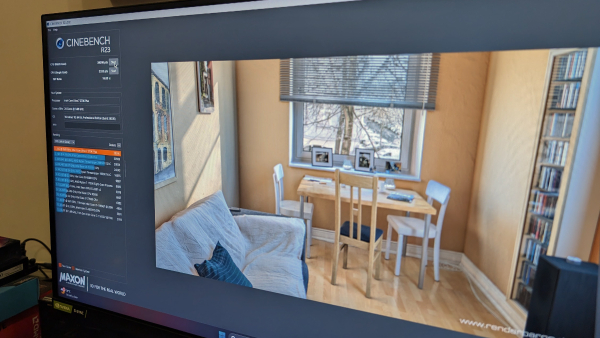
In Cinebench R23, the Core Ultra 7 270K Plus posts a multi-core score of 42,986 points and a single-core score of 2,382 points. This makes it substantially faster than the AMD Ryzen 7 9700X (20,065/2,184), Ryzen 7 9800X3D (22,553/1,945), and even the Core i9-14900K (39,053/2,185). The gains are particularly noticeable in multi-threaded workloads, where the 270K Plus outpaces the 14900K by around 10 percent.
The newer Cinebench 2024 benchmark tells a similar story. The processor achieves 2,440 points in the multi-core test and 141 points in single-core performance. Compared to the Ryzen 7 9700X's 1,113 and 129 points, respectively, the Core Ultra chip delivers a massive lead. It also comfortably surpasses the Ryzen 7 9800X3D (1,194/122) and outperforms the Core i9-14900K's multi-core score of 1,806 points. Productivity-focused benchmarks further highlight Intel's improvements.
In Geekbench 6, the Core Ultra 7 270K Plus scores 22,870 in multi-core and 3,251 in single-core testing. These figures are significantly higher than the Ryzen 7 9700X (15,488/3,259), Ryzen 7 9800X3D (16,837/3,171), and Core i9-14900K (15,151/2,927), showcasing strong gains in both lightly threaded and heavily threaded workloads.
Rendering performance is another area where the processor excels. In Blender 4.0, the Core Ultra 7 270K Plus records scores of 270 in Monster, 175 in Junkshop, and 129 in Classroom. By comparison, the Ryzen 7 9700X scores 116, 80, and 62, while the Ryzen 7 9800X3D achieves 153, 98, and 79. Even the Core Ultra 5 250K Plus trails noticeably, underscoring the substantial performance advantage offered by the higher-end model.
Intel Core Ultra 7 270K Plus Review: Performance
This 1440p gaming performance showcase demonstrates the impressive capabilities of the Intel Core Ultra 7 270K Plus when paired with the Nvidia GeForce RTX 5070 Ti. Across a wide range of modern AAA and competitive titles, this combination consistently delivers high frame rates at maximum settings, providing a smooth, responsive, and immersive gaming experience.
The setup particularly shines in fast-paced shooters, where low latency and exceptional frame delivery translate into fluid gameplay during intense firefights. Large open-world games benefit from the processor's strong single-core and multi-core performance, maintaining stable frame rates across expansive, detail-rich environments. Even in graphically demanding titles featuring advanced ray tracing, complex physics, and large-scale simulations, the Core Ultra 7 270K Plus keeps the RTX 5070 Ti fully fed, ensuring the GPU performs at its full potential without noticeable bottlenecks.
- Call of Duty: Black Ops 6 (Ultra): 180 FPS
- Battlefield 6 (Ultra): 160 FPS
- Marvel Rivals (High): 155 FPS
- Doom: The Dark Ages (Nightmare): 120 FPS
- Avatar: Frontiers of Pandora (High): 120 FPS
- Far Cry 6 (Ultra): 120 FPS
- Cyberpunk 2077 (Ultra): 120 FPS
Whether navigating densely populated futuristic cities, battling through visually intense action sequences, or competing in massive multiplayer battlefields with dynamic destruction, the processor handles demanding workloads with ease. The benchmark results clearly show that the Intel Core Ultra 7 270K Plus is a powerful foundation for high-refresh-rate 1440p gaming, offering the processing headroom needed for both today's most demanding games and future-generation titles.

Intel Core Ultra 7 270K Plus Review: Value for Money
At ₹42,000 to ₹45,000, the Intel Core Ultra 7 270K Plus is a premium investment. For pure gaming, the extra cost is tough to swallow, as the actual frame rate gains over top-tier AMD or even mid-range Intel options don't fully justify the price gap.
However, its value proposition shifts dramatically for creators and professionals. The chip's true strength lies in its exceptional multi-core performance, where it thrives in heavily threaded, resource-intensive tasks. It excels at complex 3D scene rendering in Blender, handling 4K/8K video editing and multi-track export pipelines, and running local AI model training or large-scale code compilation.
If your daily workflow balances high-end gaming with heavy content creation, this processor provides the exact processing headroom needed to justify its premium.
Intel Core Ultra 7 270K Plus Review: Verdict
If you're building a pure gaming rig, the Intel Core Ultra 7 270K Plus probably isn't the best place to drop ₹42,000 to ₹45,000. It pairs beautifully with the RTX 5070 Ti for flawless 1440p gaming, but you won't see a massive frame rate leap over the cheaper Ultra 5 250K Plus.
Where this chip actually won me over is its multi-core muscle. It absolutely crushes the Ryzen 7 9800X3D and even outpaces the old i9-14900K in Cinebench and Blender.
If you are a hybrid user like me-someone who needs to smash through 4K video exports, render complex 3D scenes, or compile heavy code before jumping into a Black Ops 6 session-the productivity time saved makes this a stellar investment. Skip it for gaming alone but buy it immediately if you need a true creative powerhouse.
| Attributes | Notes | Rating |
|---|---|---|
| Build Quality | Test Rig | 4/5 |
| Software / Bundled Experience | Synthetic Benchmarks | 5/5 |
| Performance | Gaming Test | 4.5/5 |
| Value for Money | Price to Performance | 3.5/5 |
Why You Should Buy
The Intel Core Ultra 7 270K Plus is an excellent choice for users who need more than gaming performance. Its strong multi-core architecture excels in demanding workloads such as Blender rendering, 4K video editing, software compilation, streaming, and heavy multitasking. The processor consistently outperforms competing Ryzen chips in several productivity benchmarks while also surpassing Intel's previous-generation Core i9-14900K in key tests. Combined with support for high-speed DDR5 memory and strong single-core performance, it offers a well-rounded platform for creators, professionals, and power users who want a processor capable of handling intensive workloads without compromise.
Why You Shouldn't Buy
The Intel Core Ultra 7 270K Plus is difficult to justify if gaming is your primary focus. While it delivers excellent frame rates, the real-world gaming advantage over more affordable processors, including Intel's own Core Ultra 5 250K Plus, is relatively small. The premium pricing makes it harder to recommend for budget-conscious builders, especially when competing AMD options offer excellent gaming performance at lower costs. The processor also requires a capable cooling solution to maintain peak performance under sustained workloads. For users focused solely on gaming, the extra investment may be better spent on a faster graphics card.
-
 1,29,999
 -
 22,999
 -
 64,999
 -
 99,999
 -
 29,999
 -
 39,999
 -
-
 63,999
 -
 1,56,900
 -
 96,949

-
 1,39,900
 -
 1,29,900
 -
 79,900
 -
 65,900
 -
 12,999
 -
96,949
-
 16,499
 -
 38,999
 -
 30,700
 -
 49,999
-
 19,999
 -
 17,970
 -
 21,999
 -
 13,474
 -
 18,999
 -
 22,999
 -
 19,999
 -
 17,999
 -
 26,999
 -
 5,999
5,999
-1763362932432.svg)

 Continue with Google

