


 Click it and Unblock the Notifications
MSI Claw 8 EX AI+ Review: Did Intel Just Set the Benchmark for Handheld Gaming Performance

The handheld gaming PC market is undergoing a major shift. Devices are becoming more powerful but also significantly more expensive. The MSI Claw 8 EX AI+ represents the peak of this trend. It features Intel's latest silicon platform as opposed to the familiar AMD chips, we've become accustomed to on consoles.
This new handheld showcases the raw processing power of the Intel Arc G3 Extreme chip. It easily manages over sixty frames per second in modern demanding titles. These frame rates are achievable at native 1200p resolution using medium settings. However, this premium hardware comes with a substantial price tag.

MSI Claw 8 EX AI+ Review: Two-Minute Review
The MSI Claw 8 EX AI+ brings a major hardware upgrade with Intel's Arc G3 Extreme platform, 32GB RAM and a 1TB SSD. In my testing, it handled demanding games well at 1080p Medium, reaching 65 FPS in Hogwarts Legacy, 110 FPS in Forza Horizon 5 and 50 FPS in Cyberpunk 2077. Less demanding titles ran much faster, with Hades reaching 200 FPS.
The 8 inch display, Hall Effect sticks and triggers, dual Thunderbolt 4 ports and microSD card slot make the hardware versatile, while the updated Xbox Mode makes Windows feel more suitable for handheld gaming. MSI Center M also provides useful power and fan controls, although its software still has occasional reliability issues.
Battery life varies significantly with power settings. I got around two hours at 30W, over two and a half hours at 20W and roughly three and a half hours at 15W. The device is also fairly bulky, and the $1,799 price puts it firmly in premium gaming territory.
MSI Claw 8 EX AI+ Review: Value for Money
The MSI's new flagship gaming handheld enters the global market with a price tag of $1,799 (roughly Rs 1,72,250). In India, import duties and local taxes could push this price even higher. This positioning places the device in the same price range as gaming PCs and laptops, making it increasingly difficult for manufacturers to pitch such devices as secondary gaming hardware meant to simply accompany a PC or laptop.
At this price point, consumers are likely to expect it to serve as a primary gaming device in its own right, rather than an expensive companion to their existing gaming setup.
However, several external market factors explain this steep price increase. Global demand for semiconductor components remains at an all-time high. AI data centers are consuming vast quantities of high-speed memory and storage. This supply squeeze has forced RAM and solid-state drive manufacturers to raise global prices.
Almost every major handheld manufacturer has adjusted their pricing strategy accordingly. Even budget-friendly options like the Steam Deck have seen significant price increases. Lenovo's latest flagship, the Legion Go 2, now starts at 1,499 dollars for its base configuration. Its higher-spec models match the MSI flagship at 1,799 dollars.
For the premium price, MSI offers a single high-end hardware configuration. This package includes the Arc G3 Extreme processor, 32GB of RAM, and a 1TB SSD. This memory quantity is crucial for running modern PC games smoothly on integrated graphics. It provides ample bandwidth to assist both the processor and the integrated graphics core.
MSI Claw 8 EX AI+ Review: Design and Compactness
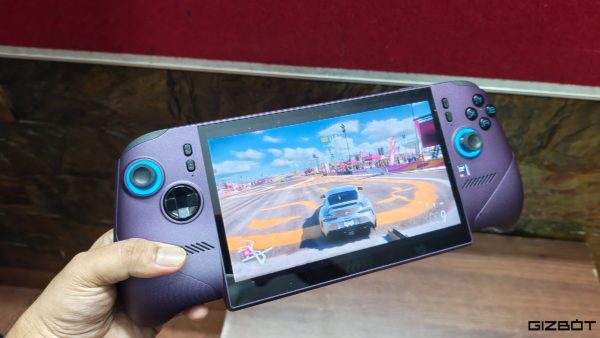
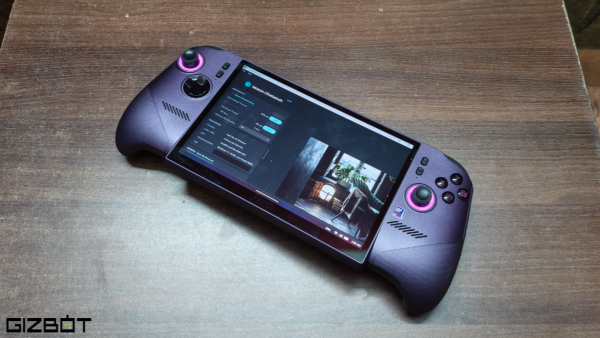
At first glance, the MSI Claw 8 EX AI+ feels familiar. MSI has clearly taken some inspiration from competing handhelds, particularly in the way the curved grips sit in your palms. The flared handles and textured plastic provide a reassuring grip, and during longer gaming sessions, I rarely felt like the device was going to slip out of my hands.
However, the sheer size of the Claw 8 EX AI+ quickly becomes noticeable. At around 11 inches wide and approximately 1.7 pounds, it is a substantial handheld. It is lighter than Lenovo's bulkier alternative, but people with smaller hands may find it difficult to maintain a comfortable grip for extended periods.
I also found the button layout slightly awkward. The system menu buttons sit quite high on the front, forcing your thumbs to stretch away from the sticks. More frustratingly, the MSI-specific buttons sit directly below the standard system controls. I occasionally pressed the MSI settings button when I intended to bring up an in-game map or menu. It's a small issue, but during an intense gaming session, these accidental interruptions can be surprisingly annoying.
The Windows integration doesn't always help either. Closing the MSI control overlay doesn't consistently return focus to the game, meaning I sometimes had to tap the touchscreen before the controller inputs started working again. This is the sort of minor software friction that makes a handheld feel less seamless than it should.
The actual controls, thankfully, feel much more reassuring. MSI uses Hall Effect sensors for the thumbsticks and triggers, eliminating the physical contact found in traditional analogue mechanisms. That should reduce wear and the likelihood of stick drift over time. While newer TMR technology can offer advantages in areas such as power efficiency, Hall Effect sticks are still a significant step up from conventional analogue potentiometers.
The display design is another interesting decision. The screen extends slightly below the main controller section, allowing MSI to accommodate a large 8-inch panel without making the entire handheld even wider. Despite the unusual construction, the chassis feels solid, with very little flex when handled.
Connectivity is another strong point. Along the top, you get two Thunderbolt 4 ports, making it possible to connect fast storage, external displays or compatible graphics solutions. MSI has also retained a microSD card slot and a 3.5mm headphone jack.
Overall, the Claw 8 EX AI+ feels like a device designed around maximum capability rather than minimum size. The trade-off is that you get plenty of hardware and connectivity, but the physical bulk and some questionable button placement become noticeable the longer you play.
MSI Claw 8 EX AI+ Review: Software / Bundled Experience
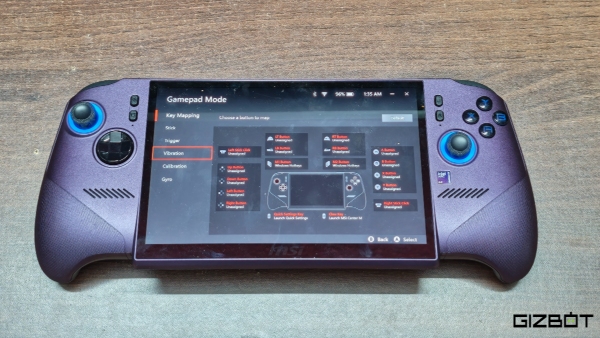
The MSI Claw 8 EX AI+ runs Windows, but MSI has layered several gaming-focused tools on top to make the handheld easier to manage. MSI Center M acts as the main control hub, offering access to fan curves, thumbstick dead zones, RGB lighting, system information, drivers and programmable rear buttons. You can also create macros when a keyboard is connected. However, customisation remains somewhat limited, with no per-game profiles, Desktop mode button remapping or option to use the rear buttons as modifiers.
The Quick Settings panel is more useful during gameplay, offering PL1 and PL2 power sliders alongside Endurance Mode, which caps games at 30fps to improve battery life, and an AI Engine that targets roughly 25W for a balance between performance and efficiency. Reliability could be better, though. Quick Settings occasionally failed to open during my testing, while MSI Center M sometimes stopped responding and had to be restarted through Task Manager.
Intel's GPU software adds another layer of control. Endurance Gaming lets you prioritise battery life with 30fps, 45fps or 60fps limits, while the XeSS Multi Frame Generation Override can enable supported frame-generation features in compatible games. I found frame generation most effective when the native frame rate was already reasonably high, although having to jump into a separate Intel app makes these features less convenient.
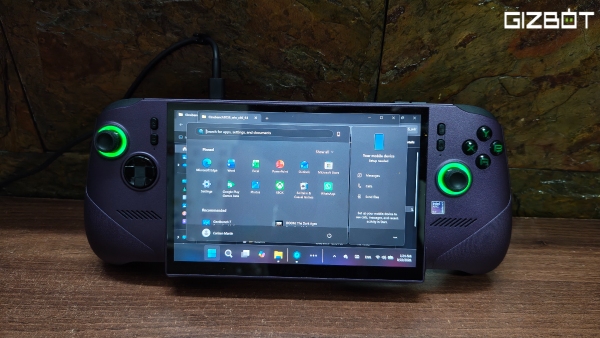
The biggest improvement is Xbox Mode, which makes the Claw feel considerably more like a dedicated handheld console. The updated grid-based library lets you add executable files directly, reducing the need to return to the Windows desktop. Once I had everything configured, I spent most of my gaming sessions inside Xbox Mode. The overall software experience still has some rough edges, but it is a meaningful improvement in making the Claw 8 EX AI+ feel less like a miniature Windows PC and more like a proper gaming handheld.
MSI Claw 8 EX AI+ Review: Performance
The biggest hardware change is the move from Intel's Core Ultra 7 258V to the Arc G3 Extreme, based on Intel's Panther Lake architecture and designed specifically with portable gaming in mind. It uses Intel's 18A process and retains dual Thunderbolt ports while prioritising power efficiency, thermals and battery life.
The chip features 2 Cougar Cove performance cores, 8 Darkmont efficiency cores and 4 low-power efficiency cores, providing a balance of gaming performance and background multitasking. The integrated GPU is the bigger upgrade, with 12 Xe3 graphics cores clocked at up to 2.3GHz. This stronger GPU should help the Claw 8 EX AI+ handle demanding games at higher settings while making features such as upscaling and frame generation more useful.
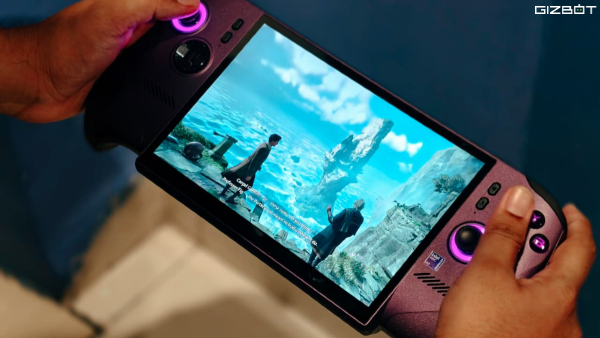
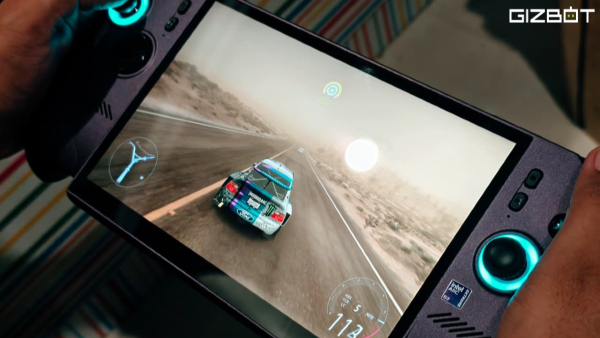
At 1920 x 1080 with the Medium preset, the Claw 8 EX AI+ delivered 65 FPS in Hogwarts Legacy, 110 FPS in Forza Horizon 5, 50 FPS in Cyberpunk 2077, 80 FPS in Shadow of the Tomb Raider and 60 FPS in DOOM The Dark Ages. Less demanding titles ran considerably faster, with Hades 2 reaching 150 FPS and Hades hitting 200 FPS.
Intel's Endurance Gaming mode lets users lock games to 30, 45 or 60 FPS to reduce power consumption. The 45 FPS option is particularly useful, offering a smoother experience than 30 FPS while still reducing power draw, while 60 FPS provides a good balance between fluidity and battery life.
MSI Claw 8 EX AI+ Review: Cooling and Noise
The Claw 8 EX AI+ also posts strong synthetic benchmark numbers. It scored 2,611 in Geekbench 6 single-core and 14,521 in multi-core, while Geekbench OpenCL and Vulkan returned 49,754 and 52,221 points, respectively.
In graphics testing, the handheld scored 6,865 in 3DMark Time Spy. Cinebench 2026 recorded 465 points in single-core and 3,462 points in multi-core.
These numbers highlight the additional CPU and GPU headroom offered by the Arc G3 Extreme, although real-world gaming performance remains the more important measure for a handheld.
MSI Claw 8 EX AI+ Review: Thermals and Noise
Battery life remains one of the MSI Claw 8 EX AI+'s biggest compromises, although lowering the power limit can significantly improve endurance. In Hades, I got around two hours of gaming, while running the device at 30W delivered close to two hours. Dropping to 20W extended runtime to more than two and a half hours, while 15W pushed it to around three and a half hours. Considering the performance the Arc G3 Extreme can deliver at 15W, this is particularly impressive, with similar settings and frame rates to what the Z2 Extreme can achieve at around 25W. Battery life at 10W was around 20 minutes shorter than expected, although the difference is relatively minor in everyday use.
MSI's Endurance Mode is useful for lighter games, capping performance at 30fps to reduce power consumption. Charging, however, is relatively slow, with a full charge taking around two hours. Overall, demanding gaming still requires keeping the charger nearby, but power tuning can make the Claw considerably more efficient.
The stereo speakers are another strong point. They get loud enough for most gaming sessions, with 40-50% volume generally being sufficient during the day and around 30% working comfortably in quieter environments.
The sound has enough clarity to make dialogue, game effects and background music easy to distinguish, while the stereo separation adds a little more depth to the overall experience. They don't replace a good pair of headphones for competitive gaming or detailed listening, but for casual gaming, streaming and everyday use, I rarely felt the need to plug in an external audio device.
The speakers also maintain their clarity reasonably well as you increase the volume, although pushing them close to maximum does make the limitations of the small chassis more apparent.
Overall, the Claw 8 EX AI+ has excellent built-in speakers for a handheld, and they are more than capable of handling most gaming and media sessions without immediately reaching for headphones.
MSI Claw 8 EX AI+ Review: Verdict
The MSI Claw 8 EX AI+ is a powerful but highly specialised handheld gaming PC. Its Arc G3 Extreme, 32GB RAM, large display, Hall Effect controls and Thunderbolt 4 connectivity give it the hardware to deliver strong performance in demanding games, while Xbox Mode makes the Windows experience more handheld friendly.
However, the $1,799 price tag changes the equation. At this level, buyers are also looking at gaming laptops that can offer larger displays, stronger sustained performance and greater upgrade flexibility. Battery life also remains a compromise during demanding gaming, while the bulky design and occasional software quirks prevent the device from feeling completely seamless.
For enthusiasts who want maximum portable performance and are willing to pay a premium for the handheld form factor, the Claw 8 EX AI+ makes a strong case for itself. For everyone else, its premium pricing makes competing handhelds and conventional gaming laptops important alternatives to consider. Overall, this is a flagship handheld built for enthusiasts rather than the mainstream gaming audience.
| Attributes | Notes | Rating |
|---|---|---|
| Value for Money | The Cost of Premium Handheld Gaming | 2.5/5 |
| Design and Compactness | Ergonomics and Physical Design | 4.5/5 |
| Software / Bundled Experience | Software Experience | 4/5 |
| Performance | Gaming Performance | 5/5 |
| Cooling and Noise | Synthetic Benchmarks | 4/5 |
| Thermals and Noise | Real-World Battery Life & Audio | 4/5 |
-
 1,29,999
 -
 22,999
 -
 64,999
 -
 99,999
 -
 29,999
 -
 39,999
 -
-
 63,999
 -
 1,56,900
 -
 96,949

-
 1,39,900
 -
 1,29,900
 -
 79,900
 -
 65,900
 -
 12,999
 -
96,949
-
 16,499
 -
 38,999
 -
 30,700
 -
 49,999
-
 19,999
 -
 17,970
 -
 21,999
 -
 13,474
 -
 18,999
 -
 22,999
 -
 19,999
 -
 17,999
 -
 26,999
 -
 5,999
5,999
-1763362932432.svg)

 Continue with Google

