


 Click it and Unblock the Notifications
Zotac Gaming Alloy mATX Case Review: Spacious Interior Makes PC Building a Breeze

Zotac is best known for its graphics cards and compact PCs, but the company has now stepped into the DIY PC case market with the new Gaming Alloy. Instead of launching a conventional ATX chassis, Zotac has opted for a micro-ATX tower that focuses on ease of building, broad hardware compatibility, and clean aesthetics.
Priced at Rs. 5,999, the Alloy is aimed at gamers and PC enthusiasts looking for a premium-looking compact chassis without sacrificing compatibility.

Zotac Gaming Alloy mATX Case Review: Two-Minute Review
The Zotac Gaming Alloy is an impressive debut that gets the fundamentals right. While it's marketed as a micro-ATX chassis, its spacious interior feels closer to a mid-tower, making it incredibly easy to build in. The premium black-and-bronze finish gives it a distinctive look, while thoughtful touches like tool-less panels, a removable front dust filter, and integrated Velcro straps make assembly and maintenance hassle-free.
Airflow is another strong point, with three pre-installed PWM fans keeping temperatures well under control during both productivity and gaming workloads. The generous support for large GPUs, tall air coolers, and up to ten fans also leaves plenty of room for future upgrades.
That said, the front I/O could have benefited from an additional USB Type-A port, and the non-RGB fans may disappoint users looking for a flashier setup. Overall, the Alloy delivers a polished, builder-friendly experience with solid thermal performance and premium styling.
Zotac Gaming Alloy mATX Case Review: Connectivity and Ports
Despite being a micro-ATX case, the Zotac Gaming Alloy doesn't chase the ultra-compact route. Measuring 459 x 222 x 433mm, it feels much closer to a conventional mid-tower, allowing plenty of room for high-end hardware without making the build process frustrating.
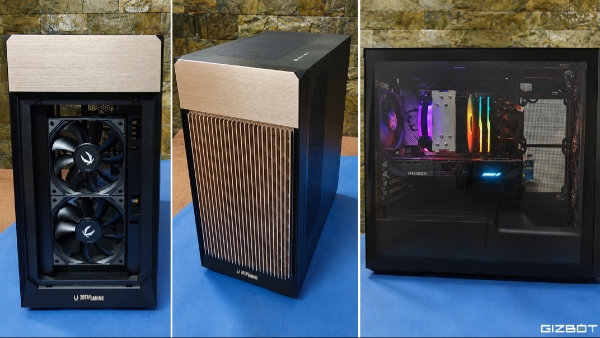
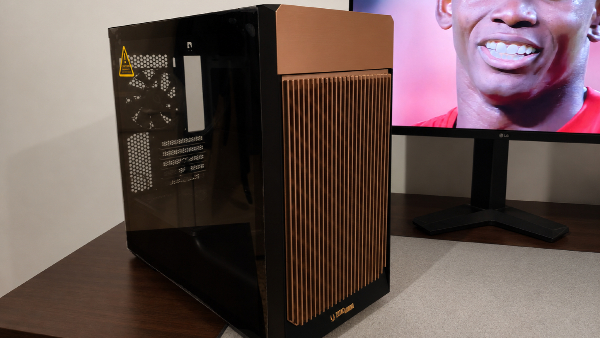
The black-and-bronze colour combination immediately stands out. Inspired by Zotac's GeForce RTX 50-series graphics cards, the front panel combines a brushed bronze finish with vertically slotted vents that give the cabinet a premium, understated appearance. It looks clean enough to fit into both gaming and professional setups.
The left side features a tinted tempered glass panel, while the top and right panels are constructed from steel. One design choice I particularly liked is the removable front dust filter. Instead of taking off the entire front panel, you can simply remove the filter insert for quick cleaning, making regular maintenance far more convenient.
All exterior panels are tool-less, secured using clips and ball studs, making access quick during installation or upgrades. The only minor complaint is that the outer front frame on my review unit felt slightly loose, although it never became an issue during normal usage.
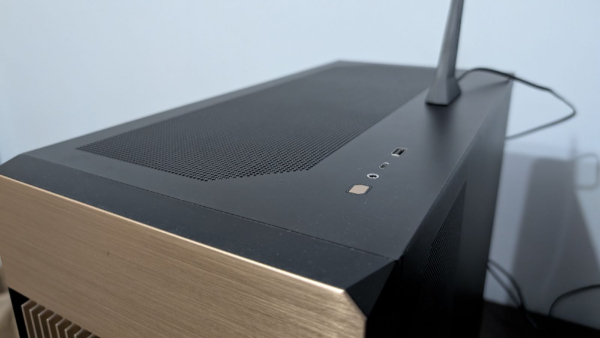
The front I/O sits conveniently on the top edge and includes:
Power button
- USB 3.2 Gen 2 Type-C
- USB 3.2 Gen 1 Type-A
- 3.5mm audio combo jack
While the Type-C port is a welcome addition, I would have preferred another USB Type-A port for connecting multiple peripherals.
Zotac Gaming Alloy mATX Case Review: Upgradeability
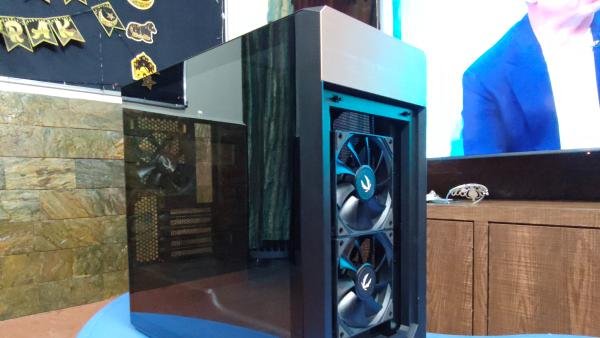
Zotac ships the Alloy with three pre-installed 120mm PWM fans - two intake fans at the front and one exhaust fan at the rear. They're non-RGB, which suits the cabinet's minimalist styling.
For users planning a more powerful gaming system, the chassis supports up to ten fans:
- Three 120mm front fans
- Two 120mm side-mounted fans
- Three 120mm or two 140mm top fans
- One 120mm rear fan
- One 120mm fan above the PSU shroud
The top panel supports radiators up to 360mm, while the rear can accommodate a 120mm radiator. Although not officially listed, there also appears to be enough room for a 240mm radiator at the front.
The top and right panels feature generous mesh ventilation, while the curved PSU shroud helps direct airflow towards the graphics card.
Zotac Gaming Alloy mATX Case Review: Performance
The biggest strength of the Alloy is how comfortable it is to build inside.
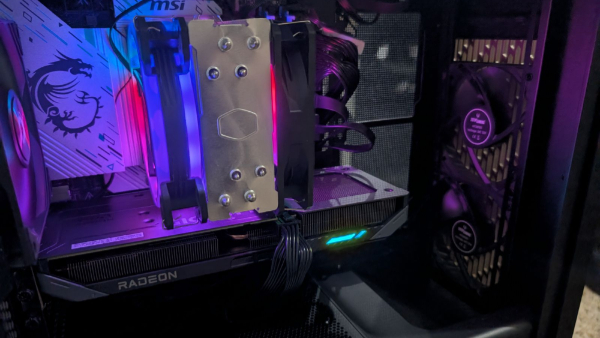
For this review, I installed:
- Intel Core Ultra 5 250K Plus Processor
- MSI B860M Gaming Plus WI-FI Motherboard
- DeepCool LE500 240mm AIO Liquid CPU Cooler
- 32GB G.Skill Trident Z5 DDR5-7200 Memory
- Western Digital Blue SN570 1TB M.2 NVMe SSD
- HIKVISION G4000 512GB PCIe Gen 4 M.2 NVMe SSD
- AMD Radeon RX 9060 XT 16GB Graphics Card
- GIGABYTE GP-P850GM 850W Modular Power Supply
Even with a full-sized graphics card, there was still plenty of unused space towards the front of the chassis. Installing the motherboard, CPU cooler and power supply never felt restrictive, which is often the case with compact cabinets.
Cable management is equally impressive. Zotac has included multiple routing cut-outs around the motherboard tray, Velcro straps for thicker cable bundles, tie-down points, and sufficient clearance behind the motherboard tray to hide excess cables neatly.
Zotac Gaming Alloy mATX Case Review: Thermals and Noise
The Alloy's airflow design translates into solid thermal performance.
Using the above configuration, the system delivered the following temperatures:
- CPU idle: ~40°C
- GPU idle: ~40°C
- CPU gaming load: ~75°C
- GPU gaming load: ~65°C
Throughout testing, neither component showed any signs of thermal throttling. The stock PWM fans also remained pleasantly quiet during web browsing, productivity workloads, and general desktop usage.
Users building a more demanding gaming PC still have plenty of room to add additional intake and exhaust fans if required.
Zotac Gaming Alloy mATX Case Review: Value for Money
At Rs. 5,999, the Zotac Gaming Alloy offers a balanced package for users looking to build a compact gaming PC without compromising on compatibility or ease of assembly. Its premium design, spacious interior, strong airflow, and thoughtful features like tool-less panels and a removable dust filter add to its overall appeal. While the inclusion of only one USB Type-A port and the absence of ARGB fans may disappoint some buyers, these omissions are unlikely to be deal-breakers for everyone.
Overall, the Alloy delivers solid value for its price, especially for builders who prioritise practicality, cooling performance, and a clean, understated design.
Zotac Gaming Alloy mATX Case Review: Verdict
The Zotac Gaming Alloy is an impressive first attempt at a DIY PC case. It delivers a clean premium design, excellent hardware compatibility, an exceptionally easy building experience, and solid airflow without trying to reinvent the traditional tower layout.
The cabinet feels far larger than a typical micro-ATX chassis, making it suitable for beginners as well as experienced builders who want a hassle-free assembly process. Features like the removable front dust filter, tool-less panels, spacious cable management area, and generous GPU clearance further improve the overall experience.
While the Alloy doesn't introduce any groundbreaking innovations, it executes the fundamentals very well. At Rs. 5,999, it is a well-rounded micro-ATX cabinet that prioritises practicality over gimmicks, making it an easy recommendation for anyone planning a compact yet powerful gaming PC.
| Attributes | Notes | Rating |
|---|---|---|
| Connectivity and Ports | Premium Design with Practical Features | 4/5 |
| Upgradeability | Airflow Gets Plenty of Attention | 4.5/5 |
| Performance | Surprisingly Spacious Interior | 4.5/5 |
| Thermals and Noise | Cooling Performance | 4/5 |
| Value for Money | A Well-Balanced Package for the Price | 4/5 |
Why Buy
If you're building a compact gaming PC without compromising on hardware compatibility, the Zotac Gaming Alloy is an excellent choice. Its spacious interior, clean cable management, strong airflow, and premium black-and-bronze design make the building experience straightforward for both first-time builders and enthusiasts. The three pre-installed PWM fans also offer quiet operation and respectable cooling out of the box, while support for large GPUs and 360mm radiators ensures plenty of upgrade potential.
Why Skip
The Alloy isn't the ideal choice if you're looking for cutting-edge features or a highly compact micro-ATX chassis. It prioritises compatibility over minimising its footprint, so it occupies nearly as much desk space as some mid-towers. The front I/O is fairly basic with only one USB Type-A port, and the stock fans lack RGB lighting. If flashy aesthetics or unique layouts are your priority, this cabinet may feel a little too conventional.
-
 1,29,999
 -
 22,999
 -
 64,999
 -
 99,999
 -
 29,999
 -
 39,999
 -
-
 63,999
 -
 1,56,900
 -
 96,949

-
 1,39,900
 -
 1,29,900
 -
 79,900
 -
 65,900
 -
 12,999
 -
96,949
-
 16,499
 -
 38,999
 -
 30,700
 -
 49,999
-
 19,999
 -
 17,970
 -
 21,999
 -
 13,474
 -
 18,999
 -
 22,999
 -
 19,999
 -
 17,999
 -
 26,999
 -
 5,999
5,999
-1763362932432.svg)

 Continue with Google

