


 Click it and Unblock the Notifications
“Why Should We Gatekeep Flagship Experiences?”: Xiaomi on Redmi Note 15, Pad 2 Pro and Its 2026 Reset

For over a decade, Xiaomi built its reputation in India by winning on specs and pricing. That playbook worked, until it didn’t.
Indian smartphone buyers today are holding on to devices longer, scrutinising design and durability more closely, and expecting software support that lasts well beyond the first year. In that context, the mid-range is no longer forgiving of shortcuts. A phone can’t afford to be great at one thing and average at everything else.
That’s the reality Xiaomi says it is responding to with its first major launches of 2026 — the Redmi Note 15 series and Redmi Pad 2 Pro.

In a candid conversation with Gizbot, Anuj Sharma, Chief Marketing Officer, Xiaomi India, and Sandeep Sarma, Associate Director of Marketing and PR, framed these two products not as routine upgrades, but as a reset in how the brand wants to be judged on design, durability, long-term software support, and how devices fit into real-world usage.
“You can’t have a device today that only plays on specs,” Anuj said. “You can’t do one thing well and compromise on everything else.”

“Note Has Always Sat at the Centre of the Market”
“The first Redmi Note launched in December 2014. It’s been 11 years now,” Anuj says. “Note has always straddled the centre of the market, no matter how price points moved.”
What’s different this time, according to Xiaomi, is that the company is going back to a more focused approach.
“For the first time in 7–8 years, we’re launching a classic Note again,” he explains. “Earlier, we were doing two or three Note variants together. This time, we had to take every market factor into account.”
That meant performance and battery were givens. The harder part was experience.
“Experience is where things start to matter now — design, feel, durability, cameras, software, all of it together.”
Thin Is Easy. Making It Last Is Harder.
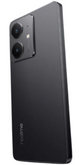
Xiaomi calls the Note 15 the thinnest Note ever. But Anuj is quick to downplay thinness as a headline feature.
“Beyond a point, thin phones become hard to hold,” he says. “This one isn’t just thin, it feels thinner and more ergonomic.”
The real challenge, he says, came after that.
“Once you make a phone thinner, the first question is: will it last?”
Xiaomi says it reworked the structure entirely, from glass to mid-frame.
“We strengthened the materials, changed the internal structure, and tested it for repeated drops — 1.5 metres, 1.7 metres. And then there’s the Indian monsoon.”
That’s not theoretical.
“Monsoons are when service centres see the most footfall in India. You can’t escape the rain here.”
“A Smartphone Is a Creation Tool Too”
One area Xiaomi believes has been underserved in the mid-range is the camera.
“A smartphone today is as much a creation tool as it is a consumption tool,” Anuj says. “Creation shouldn’t start only at ₹1 lakh.”
He rejects the idea that serious creation is reserved for flagships.
“Everyone starts with a pencil and paper. Creation exists at every level.”
The goal with Note 15, he says, was to make sure the camera experience doesn’t feel like an afterthought even in the “classic” Note.
Software Is No Longer Invisible
Hardware alone isn’t enough anymore, Xiaomi admits.
“People are using their phones longer,” Anuj says. “In India, the average upgrade cycle is about 3.5 years. For Note users, it’s closer to 4.5 years.”
That shift forced Xiaomi to rethink software support.
“The Note 15 will get four years of Android upgrades and six years of security updates,” he says. “You’ll be in 2030 or 2031 and still getting updates.”
Then he poses a question back. “Why should any brand — especially a brand like us — gatekeep flagship experiences away from the masses?”
Tablets Are No Longer Just Big Screens
Xiaomi’s second big 2026 bet, the Redmi Pad 2 Pro, reflects a similar change in thinking.
“Tablets are becoming the future of computing,” Anuj says. “People aren’t buying them just to watch YouTube anymore.”
He compares today’s tablet moment to laptops two decades ago.
“Back then, buying a laptop was about the idea of doing something better. Tablets are reaching that stage now.”
For him, the appeal is simple.
“I don’t want to carry a 1.5 or 2kg laptop and hunt for plug points at the airport. With a tablet, battery life, mobility, flexibility — life becomes easier.”

How Xiaomi Knows a Tablet Is Working
Unlike phones, Xiaomi isn’t judging the Pad 2 Pro only on sales numbers.
“One clear indicator is how many users also buy the pen or keyboard,” Anuj explains. “That tells us they’re using it as a computing device, not just for watching videos.”

This insight came from experience.
“Our earlier Pad Pro actually outsold a cheaper consumption-focused tablet,” he says. “That told us something important about where the market is going.”
Why Phone and Tablet Are Launching Together
Launching a Note phone and a tablet together is deliberate.
“This is the first time we’re doing this with the Note series,” Anuj says. “It clearly shows we believe these devices work better together.”
The use cases are practical: shoot on the phone, edit on the tablet, consume content on a larger screen.
“You won’t hold a tablet at a concert, but you might edit that video on it later — while still on the move.”
“We Don’t Chase High Margins”
On the business side, Xiaomi is clear about its priorities.
“We’ve publicly stated that we cap our hardware profits at 5 percent,” Anuj says, referring to a statement made around Xiaomi’s IPO.
“You can’t run a loss-making business, but we’re not going to compromise our core values just to chase margins.”
The focus, he says, is longevity.
“This is a long game. Doing the right thing in 2026 should also help us in 2027, 2028 and beyond.”
What Xiaomi Says Has Changed About Indian Buyers
For Sandeep Sarma, the biggest shift is post-purchase behaviour.
“People are holding on to devices much longer now,” he says. “That changes expectations around software support and service.”
Retail has also become unavoidable.
“Xiaomi was never a retail-first brand,” Sandeep admits. “But phones and tablets are critical purchases. People want to touch and understand what they’re buying.”
That’s especially true for tablets.
“When tablets came back, people needed to know why they should buy one. That changes how we sell, how we train staff, how we think about experience.”
The Subtext of 2026
If there’s one common thread through Xiaomi’s answers, it’s this: trust matters more than spikes.
Redmi Note 15 is about protecting that trust at the heart of the market.
Redmi Pad 2 Pro is about expanding what a Xiaomi device can be in daily life.
And as Anuj puts it: “We’re 11 years into Redmi Note. We’re planning for the next 10 as well.”
-
 54,999
 -
 99,999
 -
 1,44,900
 -
 89,998
 -
 46,500
 -
 57,998
 -
 53,989
 -
 1,59,999
 -
 1,29,999
 -
 99,999
-
 70,499
 -
 1,56,900
 -
 1,30,990
 -
 17,084
 -
 16,999
 -
 30,999
 -
 9,999
9,999 -
 79,900
 -
 8,999
8,999 -
 79,999
-
 20,999
 -
 37,999
 -
 25,999
 -
 31,999
 -
 24,999
 -
 10,999
 -
 15,999
 -
 45,999
 -
 19,499
 -
 1,61,999
-1763362932432.svg)

 Continue with Google

