


 Click it and Unblock the Notifications
BenQ RD270Q Review: A Coding Monitor That Makes Sense Even If You Don't Code

I'll be upfront about something. I'm not a developer. I don't write code for a living, and my IDE time is limited to running Claude Code sessions and poking around in terminals more out of curiosity than necessity. So when BenQ sent over the RD270Q, the entry-level model in their developer-focused RD series, I came at it from a different angle than most reviewers covering this monitor will.
What I can tell you is how it holds up as a primary display for a tech journalist who works hard, games occasionally, and refuses to close the curtains.

BenQ RD270Q Coding Monitor Review: Two-Minute Review
The RD270Q is a 27-inch IPS LCD panel running at 2560 x 1440, which puts you at roughly 109 pixels per inch. That's a comfortable density at 27 inches. Text is sharp without needing aggressive scaling, and you're not running into the compatibility headaches that 4K at this size can sometimes bring.
Refresh rate is 144Hz with AMD FreeSync, and the panel supports HDR10. Contrast ratio is rated at 1300:1, which is higher than what most IPS panels deliver. Color coverage sits at 99% sRGB.
The panel uses BenQ's Nano Matte coating and carries a full stack of TUV Rheinland certifications: Flicker-Free, Reflection-Free, Low Blue Light, Eye Comfort 2.0, and Eyesafe 2.0.
On the connectivity side, you get HDMI 2.0, DisplayPort 1.4, one USB-C upstream port with 65W Power Delivery, two USB 3.2 Gen1 Type-A ports, one USB-C downstream port, and a 3.5mm headphone jack. Built-in speakers are 2W x2.
Ergonomics cover 130mm of height adjustment, tilt from -5° to 20°, ±15° swivel, and a full ±90° pivot for portrait orientation. VESA mount support is included.
BenQ RD270Q Coding Monitor Review: Design and Build
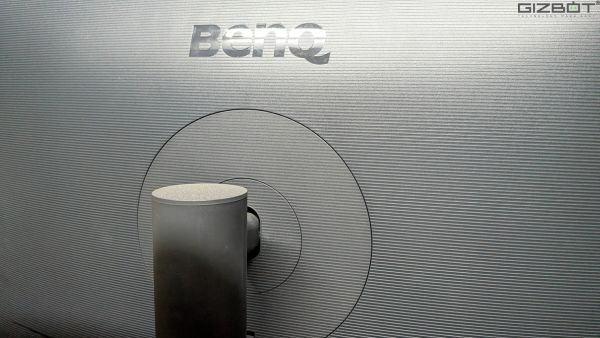
The RD270Q doesn't announce itself. The chassis is a matte dark grey, the bezels are thin, and the stand is simple and rigid. Nothing about it screams gaming monitor, which is the point. It fits into a professional workspace without drawing attention to itself.
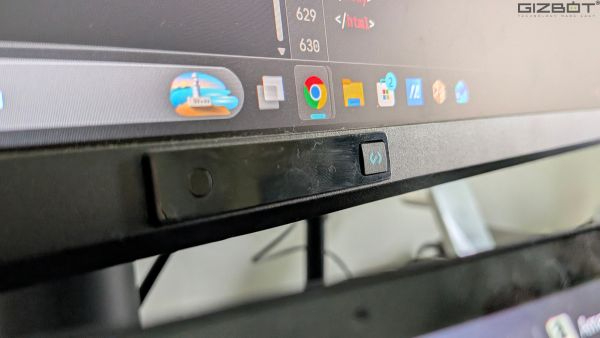
The function bar along the bottom front edge is the one design detail worth talking about. It's a strip that houses the Coding Hotkey.
There's a power button at the bottom that glows white when the monitor is on. Simple, clean, does exactly what it should.
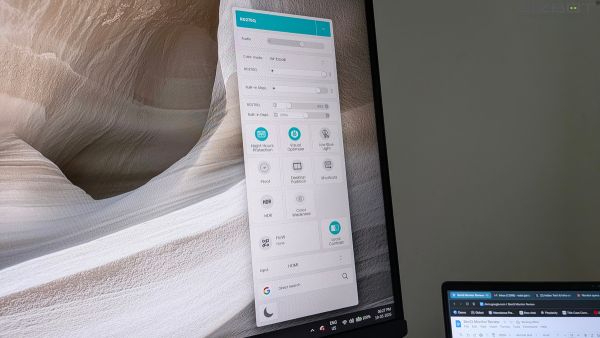
Underneath the panel, tucked at the bottom center, is a small joystick button. Press it, and you get a quick settings overlay without opening Display Pilot 2 at all (more on this later). Flick it around, and you can switch inputs, change color modes, tweak audio, access OSD settings, check power-on charging status, pull up the function bar controls, and so much more.
The stand handles everything you'd want. 130mm of height travel is enough to accommodate a wide range of desk setups and sitting positions. Tilt runs from -5° to 20°, swivel covers ±15°, and the full ±90° pivot lets you rotate into portrait orientation.
Portrait mode is worth using if you're reading long documents or, obviously, if you're a developer who wants more lines of code visible at once. At 2K resolution in portrait, text stays sharp and the vertical space is genuinely useful. VESA mount support means you can swap the stand out for a third-party arm if your setup calls for it.
BenQ RD270Q Coding Monitor Review: Display
My desk sits right next to a balcony window, and I keep the curtains open. Always. I work with natural light flooding in, sometimes even when it's direct afternoon sun, because I genuinely can't sit in a sealed room with the blinds down all day. That setup is a real test for any monitor's panel coating, and most displays fail it in some way or another.
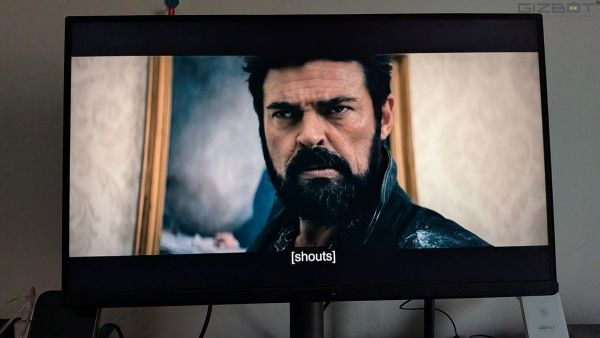
The RD270Q didn't. Light reflection on this panel was negligible. The Nano Matte coating works differently from standard anti-glare. Most anti-glare coatings scatter light across the surface, which can create a slightly hazy look even when there's no direct reflection. Nano Matte is more structured in how it diffuses incoming light, so you get less reflection without that foggy quality some matte panels carry.
Even with intense sunlight coming in from the side, the display stayed readable and comfortable. I never once felt the urge to close the curtains or reposition the monitor, which doesn't happen often.
The 1300:1 contrast ratio is a meaningful spec here, not just a number. IPS panels typically land around 1000:1, so this is a step up. In practice it means dark backgrounds actually look dark, not grey, and the difference in text readability on a dark-themed IDE is noticeable.
Brightness is rated at 350 nits, which is comfortable for most indoor environments. Given how well the Nano Matte coating handles reflections, it holds up well even in a bright room, though if you're in a very high ambient light environment you may occasionally wish for a bit more headroom.
BenQ also builds in what they call High Pixel Contrast Technology, which combines static and dynamic contrast tuning with something called Local Contrast Optimization. What that means practically is that fine details in both bright and dark areas of the image are better defined than the panel's native contrast alone would produce.
At 109 PPI, text rendering is clean and consistent across the entire panel. Characters at small font sizes stay sharp rather than getting soft around the edges, which is exactly what you want if you're spending hours reading code or documentation.
BenQ RD270Q Coding Monitor Review: Performance
You might assume 144Hz is a gaming spec that's wasted on a monitor aimed at developers. It's not. The difference shows up in everyday use before you ever load a game.
Scrolling through long documents, long articles, or long files of code at 144Hz is just smoother. There's no judder, no choppiness, no visual lag between what you're doing with your hand and what appears on screen. It sounds minor and it's difficult to articulate why it matters, but spend a day on a 144Hz display and then go back to 60Hz and you'll immediately feel what you were missing.
AMD FreeSync keeps frame delivery consistent and eliminates tearing, which is relevant both for general use and gaming. For gaming specifically, the RD270Q holds up well. It's not a dedicated gaming monitor, there's no mention of HDMI 2.1 or any of the more aggressive gaming-panel features, but for everyday gaming it's a genuinely capable screen. The combination of 144Hz, FreeSync, and a sharp 2K panel makes it easy to use as a dual-purpose display without feeling like you're compromising on either side.
BenQ RD270Q Coding Monitor Review: Features
This is where BenQ has put the most thought, and it shows. The Coding Hotkey on the function bar cycles through display modes without going into any menu. One press and you're there.
From the Display Pilot 2 app, you can also see everything: Coding Light Theme, Coding Dark Theme, Coding Paper Color, M-Book, Cinema, Game, ePaper, sRGB, User, and HDR. That's a solid range that covers most use cases without feeling bloated.
The three coding profiles are the ones you'll spend the most time with, though.
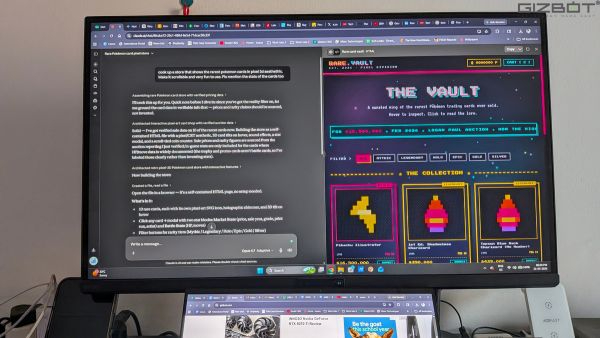
Dark Theme is calibrated for dark IDEs. It deepens contrast, makes syntax highlighting colors pop against dark backgrounds, and reduces the visual fatigue that comes from staring at a bright screen with a dark editor on top of it. During my Claude Code sessions I kept this on, and even without a developer's eye for what good IDE rendering looks like, the difference versus a standard display profile is immediately obvious. It's easier to read, less tiring, and the colors feel intentional rather than arbitrary.
Light Theme does the equivalent calibration for bright themes. It keeps the image from going flat or overexposed, which is something standard monitors struggle with when you're running a light-colored editor at comfortable brightness levels.
Paper Color is the one that genuinely surprised me. It shifts the display toward a warmer, lower-contrast look that's close to reading on an e-ink screen. BenQ describes it as a simulated e-ink experience, and that's reasonably accurate. During long reading sessions, whether that's documentation, research articles, or anything that involves sustained reading rather than glancing at UI elements, Paper Color takes the edge off in a way that's hard to fully explain until you've tried it. After an hour on this mode, switching back to a standard display profile feels noticeably harsher.
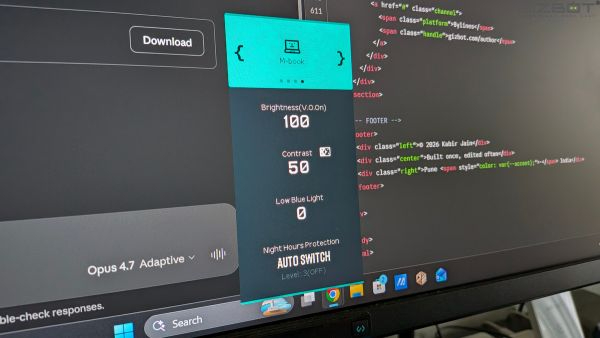
M-Book mode retunes the color profile to match a MacBook's display output. If you're running this monitor alongside a MacBook, the color mismatch between the two screens is the kind of thing that quietly bothers you all day without you being able to put your finger on why. M-Book mode addresses that directly.
The TUV certifications are a starting point, but the actual eye care features do real work.
Visual Optimizer is the ambient intelligence piece. It monitors the lighting conditions around the display and adjusts brightness and color temperature automatically. During a full workday where the light in my room shifts from morning to afternoon to evening, I never had to manually adjust anything. The display stayed comfortable throughout. This is the most useful feature for me here.
Night Hours Protection is the feature that fills a gap most monitors ignore. Your operating system has a minimum brightness setting, but even that minimum is often too bright for a dark room late at night. Night Hours Protection goes below the OS floor. If you're working in a dark environment at midnight, this is the setting that makes the difference between comfortable and not.
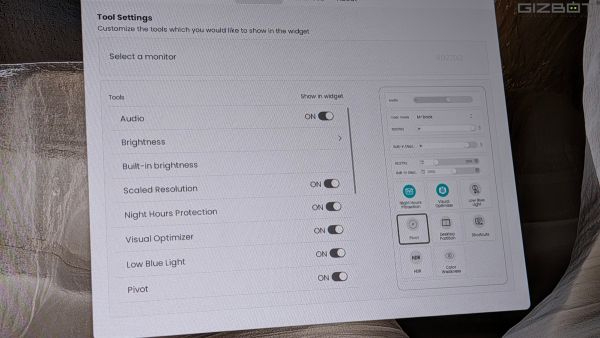
EcoPrivacy, accessed through Display Pilot 2, dims the monitor automatically after 5 to 10 minutes of inactivity. It's a small feature but a practical one, especially in an office where you're stepping away from your desk regularly.
Low Blue Light Plus and the Flicker-Free backlight round out the package. After full days of use with this as my primary display, eye fatigue was noticeably lower than what I typically experience by the end of a long working day.
BenQ RD270Q Coding Monitor Review: Features and App Experience
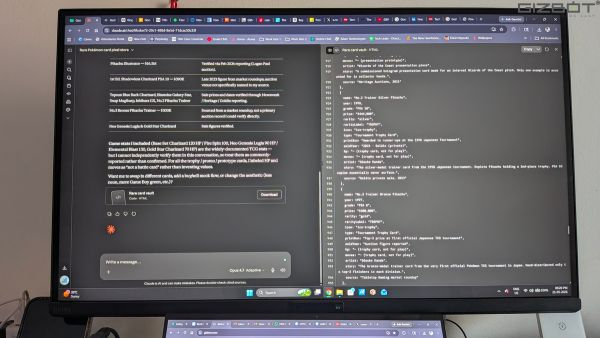
The companion app is where the monitor's smarter features live, and there's more going on inside it than the surface suggests. It runs on Windows, macOS, and Linux. Linux support is notable because most monitor software doesn't offer it, and BenQ's developer audience skews heavily in that direction.
The color mode dropdown in the app gives you the full list, Coding Light Theme, Coding Dark Theme, Coding Paper Color, M-Book, Cinema, Game, ePaper, sRGB, User, and HDR, all accessible without touching the monitor itself.
The standout feature in the Advanced tab is FloW. The idea is straightforward: you assign a display scenario to a specific app, and the monitor switches color modes automatically when that app comes into focus. So you could have it switch to Coding Dark Theme the moment your IDE opens, flip to Light Theme when you're in Google Docs, and shift to Cinema mode when a video player launches. You can also set time-based schedules, so if you want Focus Max mode from 9 to 10 AM and Movie mode from 10:30 PM onward, that's configurable without any manual intervention.
The actions you can attach to each FloW scenario go beyond just color mode. From the Add an Action menu, you can also control Visual Optimizer, Low Blue Light, Audio settings, and Night Hours Protection. So a late-night scenario could simultaneously drop blue light, engage Night Hours Protection, and switch to Paper Color, all from a single scheduled trigger.
There's also Application Color Mode, which is a simpler version of the same idea. You pair specific apps to specific color modes, and the monitor switches when you're in that app. FloW is the more powerful version with scheduling and multiple actions; Application Color Mode is the quick-and-easy version if you just want one app to always open in one profile.
The Display System Settings section in the Advanced tab reveals a few more useful options: Input Auto Scan, USB-C Awake, Power-on Charging, Standby Charging, Power-off Charging, AMA response time adjustment (set to High by default), USB-C Configuration, and Deep Sleep. AMA is worth knowing about because it directly affects motion clarity. High is the default and a reasonable starting point, though some users may want to experiment if they notice any overshoot in fast-moving content.
One feature in the app I didn't know what to make of: there's a built-in Google Search bar directly inside Display Pilot 2. I genuinely don't know who the target user is for that, or why you'd search Google through your monitor's companion app rather than just using a browser.
Lastly, one honest caveat worth repeating from our RD240Q review: Display Pilot 2 has had reliability issues in the past, specifically around not always launching consistently. The features themselves work well when the app is running, but if it doesn't start reliably on your system, some of the smarter functionality becomes hit-or-miss. BenQ has been iterating on the software, so your experience may vary.
BenQ RD270Q Coding Monitor Review: Connectivity and Inputs
HDMI 2.0 and DisplayPort 1.4 cover standard connections. The USB-C upstream with 65W Power Delivery handles display output and laptop charging over a single cable. The two USB 3.2 Gen1 Type-A ports at the bottom turn the monitor into a basic hub for peripherals. The USB-C downstream adds another device connection option.
65W is enough to charge most modern ultrabooks and mid-range laptops at full speed. Power-hungry laptops may charge more slowly under heavy load, but you'll still be gaining charge rather than losing it.
BenQ RD270Q Coding Monitor Review: Sound Quality
They're tinny. I ran them through my usual workflow and they just don't have the body to fill a room, or even a quiet desk setup. Any background noise, and my desk fan was enough, drowns them out completely. Use your PC's speakers or plug in headphones. The 3.5mm jack on the bottom handles that, and frankly that's the better option regardless.
BenQ RD270Q Coding Monitor Review: Value for Money
Priced at Rs. 29,989, the BenQ RD270Q isn't the cheapest 27-inch QHD monitor on the market, but it justifies its premium with features tailored for developers and productivity users.
The Nano Matte display, 144Hz refresh rate, 65W USB-C Power Delivery, ergonomic stand, and thoughtful software features like Coding Modes, FloW automation, and Night Hours Protection make it more than just another IPS monitor. While the built-in speakers and occasional Display Pilot 2 quirks leave room for improvement, the overall package delivers strong value for professionals who spend long hours in front of a screen and want a display designed with productivity and eye comfort in mind.
BenQ RD270Q Coding Monitor Review: Verdict
The RD270Q makes a strong case for purpose-built monitors. If you spend most of your day staring at text, whether that's code, documentation, or just long-form work, a display tuned specifically for that use case makes a noticeable difference by the end of the day. You feel it in your eyes more than anything else.
The only real question is whether you're ready to buy into a niche product. If your work is screen-heavy and you're still on a generic office monitor, this is worth the switch.
| Attributes | Notes | Rating |
|---|---|---|
| Design and Build | Design & Build Quality | 4/5 |
| Display | Picture Quality | 4.5/5 |
| Performance | Everyday Performance | 4/5 |
| Features | Coding Performance | 4.5/5 |
| Features and App Experience | Experience | 3.5/5 |
| Connectivity and Inputs | Connectivity | 4/5 |
| Sound Quality | Audio | 2/5 |
| Value for Money | Is it Worth It | 4/5 |
Why Buy
The BenQ RD270Q is an excellent choice if your work revolves around coding, writing, or productivity. Its Nano Matte display effectively minimizes reflections, while the 144Hz refresh rate makes everyday navigation feel smoother. Features like Coding Modes, Paper Color, FloW automation, Night Hours Protection, and 65W USB-C Power Delivery enhance the overall user experience. The fully adjustable stand and Linux-compatible Display Pilot 2 software further add to its appeal. If you're looking for a purpose-built monitor that prioritizes eye comfort and productivity over flashy gaming aesthetics, the RD270Q offers a well-rounded package worth considering.
Why Skip
The RD270Q may not be the ideal option if you're primarily a gamer or multimedia enthusiast. Although it offers a 144Hz refresh rate and FreeSync support, it lacks premium gaming features like HDMI 2.1 and higher HDR capabilities. The built-in speakers are underwhelming, making external speakers or headphones almost essential. Additionally, Display Pilot 2 has experienced occasional reliability issues, which may affect access to some smart features. At Rs. 29,989, there are other 27-inch QHD monitors that offer stronger gaming performance or higher-end display technologies if productivity-focused features aren't your priority.
-
 54,999
 -
 99,999
 -
 1,44,900
 -
 89,998
 -
 46,500
 -
 57,998
 -
 53,989
 -
 1,59,999
 -
 1,29,999
 -
 99,999
-
 70,499
 -
 1,56,900
 -
 1,30,990
 -
 17,084
 -
 16,999
 -
 30,999
 -
 9,999
9,999 -
 79,900
 -
 8,999
8,999 -
 79,999
-
 20,999
 -
 37,999
 -
 25,999
 -
 31,999
 -
 24,999
 -
 10,999
 -
 15,999
 -
 45,999
 -
 19,499
 -
 1,61,999
-1763362932432.svg)

 Continue with Google

