


 Click it and Unblock the Notifications
Inflatable Space Station Prototype Explodes During Testing; Here’s What Happened


Space startup Sierra Space has been testing its prototype inflatable space station module. The company has been putting the module through stringent tests and recently pushed it to its limits. The prototype blew up in the process, giving the company an idea of how much beating the space station will be able to take in real-world scenarios, Space.com reports.
The "ultimate burst pressure test" (UBP) was carried out last month and resulted in the prototype turning to ash in a dramatic fashion as seen in the video. The prototype, Large Integrated Flexible Environment (LIFE), is a segment of Blue Origin's planned Orbital Reef private space station.
Blue Origin To Launch Commercial Space Station
Blue Origin took wraps off its plans of launching a massive commercial space station in 2021, with an ambitious timeline of kicking off operations as soon as 2030. The Orbital reef is a joint venture between Sierra Space and Jeff Bezos’ Blue Origin, and it will act as a successor to the aging International Space Station (ISS).
In 2021, NASA awarded a sum of $415 million to three competing private space station concepts. The Orbital Reef team received a total of $130 million. Early renders of the space station showed a sleek design with several roomy sections. As per the company’s plans, it’s built to accommodate around 10 people and allow for spacecraft and modules to dock at multiple ports.
The development of Sierra Space’s inflatable prototype segment is being done at NASA’s Kennedy Space Center. The prime goal for the company is the build a "three-story commercial habitation and science platform designed for low-Earth orbit (LEO) that will allow humans to live and work comfortably in space," according to a statement.
LIFE Passes Tests With Flying Colors
The LIFE segment is made using woven and sewn high-tech fabrics that are capable of becoming very rigid when pressurized. The most recent test showed that LIFE can withstand pressures of up to 2-4 psi, which is comfortably above the safety requirement of just 182 psi, as per Sierra Space.
"This second successful UBP test proves we can demonstrate design, manufacturing, and assembly repeatability, all of which are key areas for certification," said Shawn Buckley, LIFE chief engineer at Sierra Space.
The company doesn’t plan on stopping there. The space firm is also working on a cargo spaceplane to supply the Orbital Reef station named Dream Chaser. This will mark a new era in commercial space missions and also advanced scientific experiments after the ISS is decommissioned.
-
 54,999
 -
 99,999
 -
 1,44,900
 -
 89,998
 -
 46,500
 -
 57,998
 -
 53,989
 -
 1,59,999
 -
 1,29,999
 -
 99,999
-
 70,499
 -
 1,56,900
 -
 1,30,990
 -
 17,084
 -
 16,999
 -
 30,999
 -
 9,999
9,999 -
 79,900
 -
 8,999
8,999 -
 79,999
-
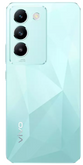 20,999
 -
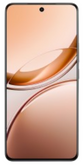 37,999
 -
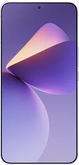 25,999
 -
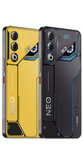 31,999
 -
 24,999
 -
 10,999
 -
 15,999
 -
 45,999
 -
 19,499
 -
 1,61,999
-1763362932432.svg)

 Continue with Google

