


 Click it and Unblock the Notifications

Vivo V80 Review: A Solid All-Rounder That Plays to Its Strengths

The Vivo V series has always had a fairly straightforward approach. It gives people good cameras, a premium-looking design, and more than dependable battery life without the flagship price tag. However, with the Vivo V80 starting at Rs. 62,999, we're now entering a price segment where buyers have every reason to expect more than just a good camera phone.
I've been testing the Vivo V80 alongside the Motorola Signature and Xiaomi 17T, and I have to say, Vivo has done a fantastic job with certain aspects of the phone. The ZEISS cameras, particularly when shooting portraits, are excellent; the battery refuses to give up, and the relatively compact design makes it a comfortable phone to use.
But there's also the Snapdragon 7 Gen 4 chipset, which makes the asking price difficult to justify. So, is the Vivo V80 worth buying? Let's find out.

Vivo V80 Review: Two-Minute Review
The Vivo V80 is a solid all-rounder with plenty to like. Its premium design, gorgeous 144Hz AMOLED display, excellent ZEISS cameras, and massive 7,200mAh battery make it a great everyday smartphone. I particularly enjoyed its portrait photography, while the battery comfortably lasted me one and a half to two days.
The Snapdragon 7 Gen 4 handles everyday tasks smoothly, although a more powerful chipset would have made the package more compelling at this price. Overall, the V80 is a great choice for photography enthusiasts and those who prioritise battery life. However, if performance matters more, the Motorola Signature and Xiaomi 17T are worth considering.
Vivo V80 Review: Design and Build
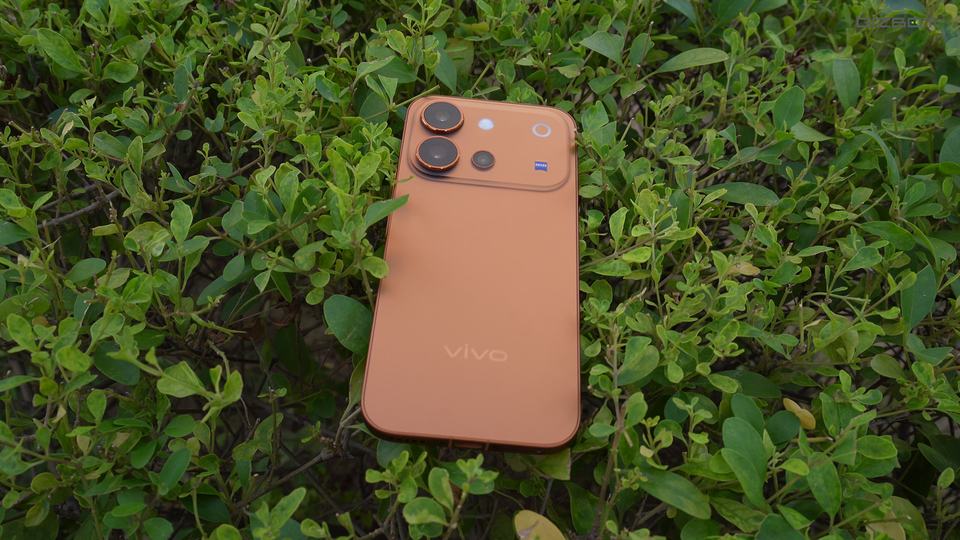
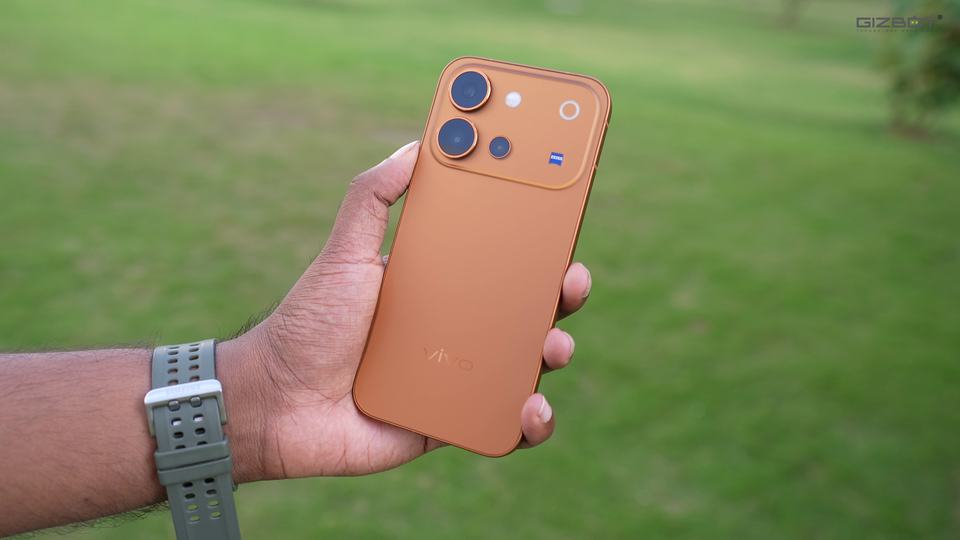
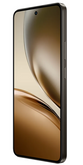
The Vivo V80 is a fairly understated smartphone, and I actually like that about it. There's no unnecessarily flashy design or massive circular camera island dominating the entire back panel. Instead, Vivo has gone with a wide camera plateau, with a frosted finish that contrasts nicely with the rest of the glass back. It looks clean, feels premium, and doesn't try too hard to grab attention.
The phone measures just 7.7mm thick and weighs around 203 grams, which is particularly impressive considering the 7,200mAh battery inside. I've also been using the Motorola Signature alongside it, and while the Motorola feels thinner and wider in the hand, the V80 is noticeably more compact.
Now, I wouldn't necessarily call a 6.59-inch phone small, but compared to the larger flagships we're used to seeing, the V80 is relatively comfortable to use. The flat aluminium frame also helps with grip.
Build quality is reassuring, too, with both IP68 and IP69 ratings for dust and water resistance. This means the phone can withstand accidental dunks in water and even high-pressure water jets under controlled conditions. The buttons also feel nice and tactile, and the overall construction feels solid, with no noticeable flex or creaking.
Vivo V80 Review: Display
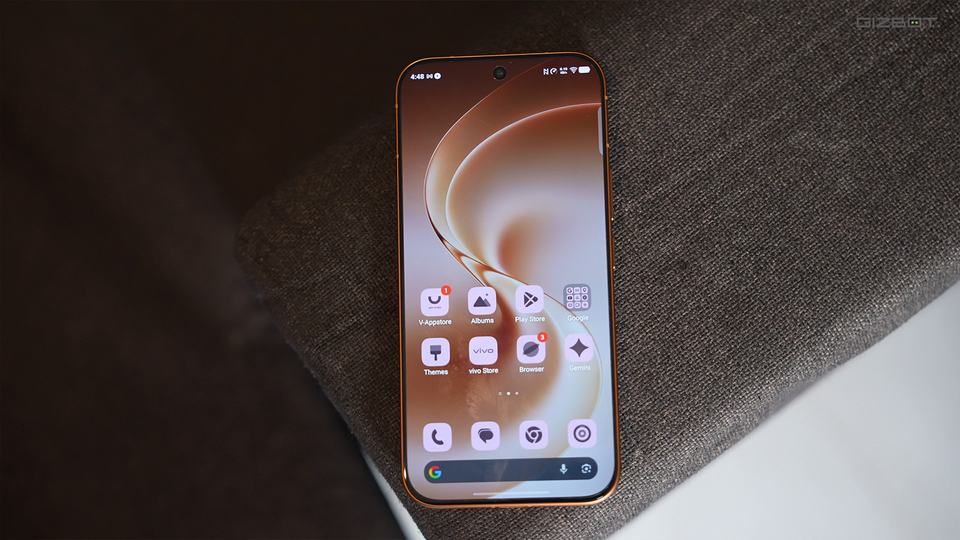
Up front, the Vivo V80 features a 6.59-inch 1.5K AMOLED display with a 144Hz refresh rate and a claimed peak brightness of 5,000 nits. On paper, those are impressive numbers, but more importantly, it's a really good display to use.
I've been watching quite a bit of content lately, including shows like Breaking Bad, Friends, and The Big Bang Theory, and this is exactly the kind of content that looks lovely on the V80's panel. The colours have a nice punch to them without looking unnecessarily oversaturated, blacks are deep, and there's enough sharpness to appreciate the finer details. Darker scenes in something like Breaking Bad are particularly well suited to an OLED display, while the brighter, more colourful scenes in Friends look equally appealing.
One thing I particularly appreciate is that Netflix supports HDR10 playback out of the box. It's a small but important detail, especially when you consider that the Motorola Signature still doesn't support it.
As for brightness, the display holds up well in everyday use. Including under direct sunlight. The 144Hz refresh rate is another headline feature, but don't expect to experience it everywhere. Most everyday applications operate at 120Hz, and frankly, I couldn't tell much of a difference while scrolling through Instagram, browsing Chrome, or navigating OriginOS. Everything feels smooth, which is what matters.
Vivo V80 Review: Performance
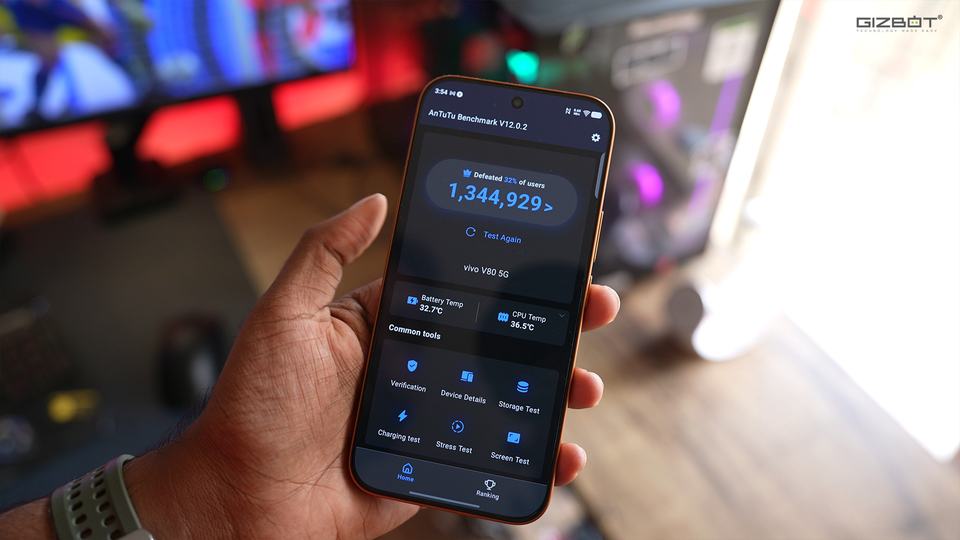
Performance is one area where I feel Vivo could have done better, especially considering how much the V80 costs. Under the hood, you get Qualcomm's Snapdragon 7 Gen 4 chipset, paired with 8GB of LPDDR4X RAM and UFS 3.1 storage. Now, there's nothing inherently wrong with this processor, but it's also the same chip you'll find in phones like the Realme P4 Pro, which costs less than half as much. And that's really where my problem lies.
In my testing, the Vivo V80 scored around 1.3 million points on AnTuTu. For comparison, the Motorola Signature, which uses the Snapdragon 8 Gen 5 and costs less, managed around 3.4 million points. That's a substantial difference in raw performance, particularly when both phones are competing in a similar price segment.
However, I don't want these benchmark numbers to give you the wrong impression. In everyday use, the V80 is actually a perfectly capable smartphone. Whether I was switching between WhatsApp, Instagram, Chrome, and other applications, browsing the web, or multitasking, the experience remained smooth. I didn't encounter any noticeable stutters or lag, and honestly, if you aren't someone who pushes your phone particularly hard, you probably won't have much to complain about.It's when you move to more demanding workloads that the hardware starts showing its limitations. Games like BGMI are capped at 60fps, despite the phone's 144Hz display, and you won't get the same performance headroom as with a Snapdragon 8-series processor. The difference also matters for more intensive tasks like video editing, where faster processing and storage can make a meaningful difference.
Another thing worth mentioning is that Vivo hasn't upgraded the chipset from the previous V70. You're essentially getting the same Snapdragon 7 Gen 4, despite the considerable jump in pricing. Even the 128GB base variant uses UFS 3.1 storage, while the Motorola Signature starts with 256GB of faster UFS 4.1 storage at a lower price. For a phone costing over Rs. 60,000, I think that's disappointing.
Coming to software, the V80 ships with OriginOS 7 based on Android 17, and this is a considerably more interesting part of the experience. Vivo has introduced a more polished interface with fluid animations, translucent UI elements, and plenty of customisation options.
You can now customise the lock screen with different clock layouts, widgets, and stickers, while the redesigned Control Center allows you to resize and rearrange quick-setting tiles. There are also little visual touches, such as Dynamic Glow animations, that give the interface a more playful personality.
I also appreciate the practical additions. Origin Workbench allows you to group applications together for multitasking, while the revamped battery settings provide detailed information about screen-on time, individual app consumption, and charging history. These are the kinds of features I find more useful than adding AI everywhere simply for the sake of it.
Overall, I have very little to complain about when it comes to everyday performance or the software experience. The Snapdragon 7 Gen 4 gets the basics right, and OriginOS 7 is a welcome addition. But at this price, getting the basics right simply isn't enough. I would have liked Vivo to offer a considerably more powerful chipset, particularly when the competition is already doing so.
Vivo V80 Review: Camera
Cameras have always been the biggest selling point of Vivo's V series, and the V80 continues that tradition. On the back, you get a 50MP Sony LYTIA 700V primary sensor with OIS, a 50MP Sony IMX882 telephoto camera with 3x optical zoom and OIS, and an 8MP ultrawide. There's also a 50MP autofocus camera on the front.
I've already spent quite a bit of time comparing the Vivo V80 against the Motorola Signature and Xiaomi 17T for a dedicated camera comparison, and I have to say, all three phones are genuinely capable shooters. However, when it comes to portraits, I personally found myself leaning towards the Vivo more often.
But before getting to portraits, let's talk about the primary camera. The 50MP Sony LYTIA 700V is a fairly capable sensor, and the images it produces have plenty of detail, good contrast, and pleasing colours. Daylight photography is particularly strong, and I like that Vivo's processing generally strikes a good balance between making an image look attractive and keeping it relatively natural.
You also get different colour profiles, along with the option to create your own colour palette by adjusting the warmth, saturation, and overall tone of an image. I think this is a useful addition because everyone has a slightly different preference when it comes to colours.
Low-light photography is a little more complicated. The primary camera can capture good-looking images after sunset, although highlights from strong light sources aren't always handled perfectly, and darker areas can lose some finer detail. Night mode helps, but this isn't quite the consistently excellent low-light experience you would expect from a proper flagship.
Vivo's collaboration with ZEISS continues to pay off here. The V80 offers multiple portrait focal lengths, including 23mm, 35mm, 50mm, 85mm, and 100mm, along with different ZEISS-inspired bokeh effects. You can experiment with the look of the background rather than settling for the same artificial blur in every photograph.
The 50MP telephoto camera, in particular, makes a considerable difference. Its 3x optical zoom gives portraits a more flattering perspective, and you don't need to stand awkwardly close to someone's face to get a tighter composition. It's also useful for photographing distant subjects without immediately relying on digital cropping.
There's plenty to experiment with, too. Vivo offers ZEISS bokeh styles such as Biotar, Sonnar, and Planar, along with creative lighting effects. I particularly appreciate having these options directly in the camera application instead of having to edit every portrait afterwards. That said, I'd recommend turning down the beauty filters if you prefer natural-looking skin textures.
Unfortunately, the 8MP ultrawide camera doesn't quite live up to the other two cameras. It's fine for squeezing more people into a photograph or capturing a wider landscape, but the drop in detail is noticeable.
The 50MP autofocus selfie camera is much more interesting. It uses a particularly wide 20mm focal length, which makes it useful for group selfies without having to stretch your arm too far. The autofocus is another welcome addition, while the ability to switch between wider and tighter framing makes it more versatile than a typical front-facing camera.
Vivo V80 Review: Battery
If there's one area where the Vivo V80 genuinely impressed me, it's battery life. Despite its relatively compact design, Vivo has managed to squeeze in a massive 7,200mAh battery, and the endurance is excellent.
My typical usage involves WhatsApp, Instagram, emails, YouTube, Netflix, and plenty of photography. I've also been using the phone extensively for camera comparisons, which means frequently switching between camera modes, recording videos, and reviewing photos. Despite all of this, the V80 comfortably lasted about 1.5 days, and with lighter use, I could stretch it to almost 2 days.
For comparison, the Motorola Signature, which I've been testing alongside the V80, packs a smaller 5,200mAh battery and generally requires charging after a full workday. ssThe difference in endurance is quite noticeable.
Charging is handled by Vivo's 90W FlashCharge technology, with the adapter included in the box. In my testing, a full charge took approximately an hour and 10-15 minutes, which is reasonable considering the battery capacity.
The only thing missing is wireless charging, which I would have appreciated at this price. However, with battery life this good, I don't think it's going to be a dealbreaker for most people.
Vivo V80 Review: Verdict
The Vivo V80 is a well-rounded smartphone that gets quite a few things right. I particularly enjoyed using its ZEISS cameras, especially for portraits, while the gorgeous AMOLED display, premium design, and excellent battery life make it a lovely phone to use every day. And honestly, getting almost two days of battery life without carrying around a bulky smartphone is something I genuinely appreciate.
Of course, there's room for improvement. The Snapdragon 7 Gen 4 handles everyday tasks effortlessly, but I would have liked a more powerful chipset at this price. The 8MP ultrawide and lack of wireless charging are also worth considering.
That said, not everyone needs flagship-level performance. If you prioritise photography, battery life, and a comfortable everyday experience, the Vivo V80 is a genuinely good option. However, if you're someone who enjoys gaming, video editing, or simply wants more raw performance for the money, the Motorola Signature and Xiaomi 17T are better options to consider. Ultimately, it comes down to what matters most to you in a smartphone.
| Attributes | Notes | Rating |
|---|---|---|
| Design and Build | 4.5/5 | |
| Display | 4.5/5 | |
| Performance | 3/5 | |
| Camera | 4/5 | |
| Battery | 5/5 |
-
 54,999
-
 99,999
-
 1,44,900
-
 89,998
-
 46,500
-
 57,998
-
 53,989
-
 1,59,999
-
 1,29,999
-
 99,999
-
 70,499
-
 1,56,900
-
 1,30,990
-
 17,084
-
 16,999
-
 30,999
-
 9,999
-
 79,900
-
 8,999
-
 79,999
-
 20,999
-
 37,999
-
 25,999
-
 31,999
-
 24,999
-
 10,999
-
 15,999
-
 45,999
-
 19,499
-
 1,61,999


 Continue with Google


