


 Click it and Unblock the Notifications
vivo X300 FE Review: The Best Compact Camera Phone You Can Buy Right Now

The Vivo X300 FE makes a simple case, you don't need a big phone to have a great camera. Or, if you want an all round feature-packed compact phone with no compromise, this could be it. I spent two weeks with the Urban Olive variant, including two days in Jaipur shooting forts, bazaars, portraits, night, and everything in between. The camera held up in ways most phones at this price don't.
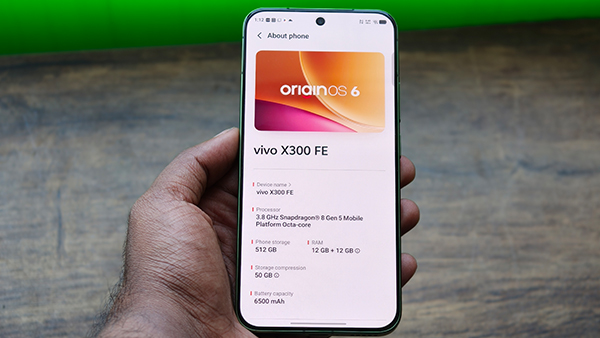
It runs on the Snapdragon 8 Gen 5, ships with Android 16, and has a 6,500mAh battery that charges fully in one hour over 90W wired. New this time is the 40W wireless charging, which the X200 FE didn't have. It's also IP68 and IP69 rated together, which is unusual at this price.
The pricing sits higher than you'd expect for a Snapdragon 8 Gen 5 device - a year ago, this chip would have put the phone in a lower bracket. But 2026 pricing has shifted across the board. iPhone 17, Galaxy S26, and most flagships have gone up. In that context, what the X300 FE offers, especially on camera, is fair value.

vivo X300 FE: Two-Minute Review
The vivo X300 FE is a compact flagship that leads with its cameras, and for the most part, they deliver.
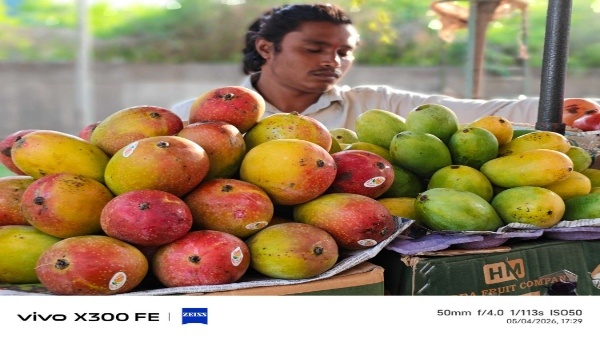
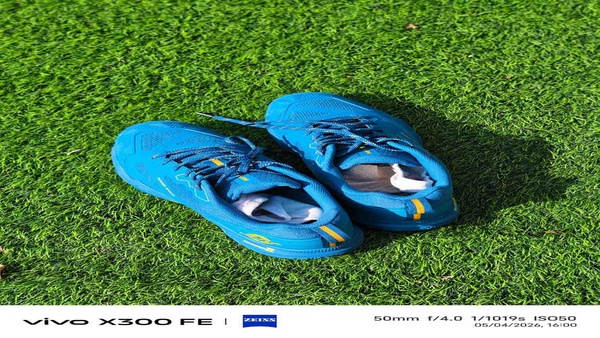
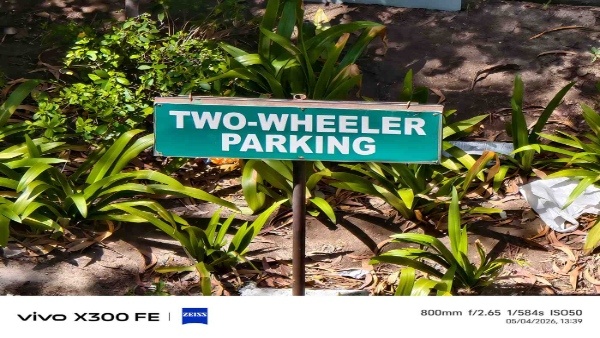
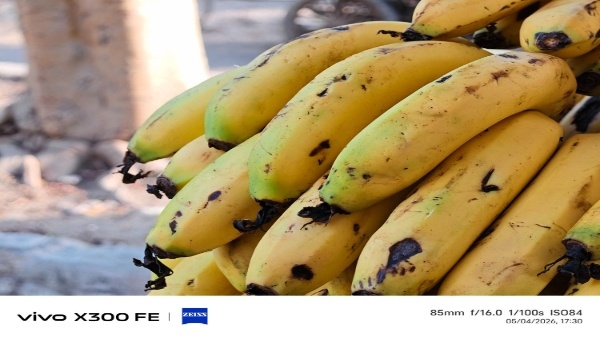
The main shooter is a 50 MP Sony IMX921 with a wide f/1.57 aperture and OIS. Daylight shots are detailed and well-exposed, and low light performance is solid without over-smoothing everything into a painting. But the standout is the telephoto - a 50 MP periscope unit with 3x optical zoom that genuinely earns the ZEISS badge. Shots at 3x are sharp and natural, and even at 10x you're pulling in usable results. The ultrawide is the weak link at 8 MP, but it gets the job done. The 50 MP selfie camera is excellent - one of the better front cameras you'll find at this segment.
Outside the camera system, the 6.31-inch 1.5K AMOLED panel is bright and sharp, the Snapdragon 8 Gen 5 keeps things snappy, and the 6,500 mAh battery with 90W charging means top-ups are quick and range anxiety basically doesn't exist.
It's compact, well-built, and the telephoto alone sets it apart from most of the competition. If camera versatility is what you're after, the X300 FE makes a compelling case.
vivo X300 FE: Design and Build
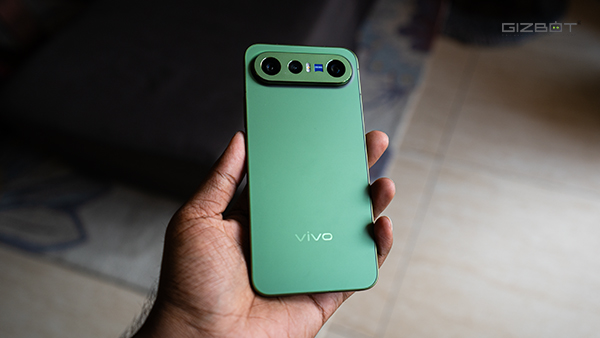
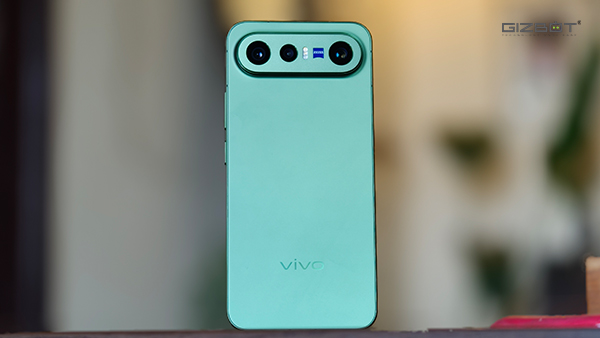
The Urban Olive colour is quieter than it sounds - more muted grey-green than anything loud. But it's still one of my favourite looking phones this year, especially in this colour. It works across contexts without drawing attention to itself. Colour options are Urban Olive, Lilac Purple, and Noir Black.
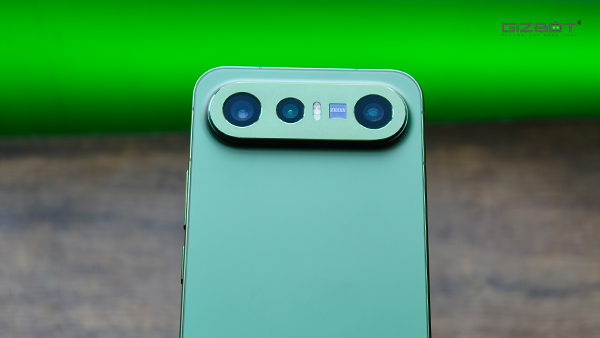
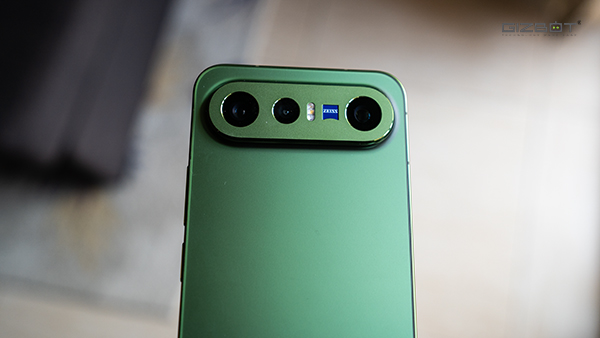
The camera module has moved to a horizontal layout at the top of the back panel, which looks cleaner than the previous arrangement and also means your fingers land on it less when you're shooting. The frame is aluminium, the phone feels solid, and at 6.31 inches it's genuinely comfortable to use with one hand. Bezels are thin, corners are rounded and nothing feels like a design decision made just to check a box. Most people who saw it around me were quite impressed with how it looked and felt in hand.
For durability, it has IP68 covering 1.5 metres underwater for 30 minutes. IP69 adds resistance to hot, high-pressure water jets. Between that, MIL-STD-810H shock certification, SGS Five-Star Drop Resistance, and SCHOTT Xensation glass on the front, this is a phone you can stop worrying about. The ultrasonic fingerprint scanner works with wet hands, which is a small thing that becomes a blessing the moment you need it.
vivo X300 FE: Display
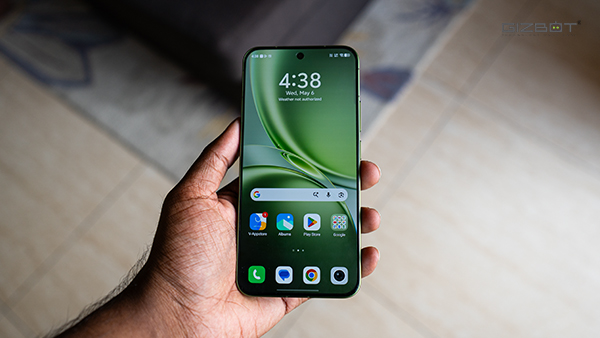
6.31-inch AMOLED LTPO panel, 1.5K, 460 PPI, 5,000 nits peak, P3 colour, Netflix HDR10+, 2160Hz PWM dimming. I know that's a lot of tech jargon to handle for anyone. It's essentially the same panel as the X200 FE, but it's one of the better displays in its price range, so the lack of an upgrade is easy to forgive.
In practice, outdoor visibility in harsh sunlight isn't a problem. The 2160Hz PWM dimming reduces the eye fatigue that lower-frequency panels cause during long use. For anyone who uses their phone a lot, that's a real difference over a full day. And to add to that, as a user, the first thing I got impressed after booting the device was the display as it comes with minimal bezels and I really liked it without caring to see if it's an upgrade or not.
If you are a gamer, and prefer a larger display, then this clearly isn't one. Although, in my gaming experience I did not find any technical issue with it. It runs everything smoothly, colours are punchy and objects look sharp. Since I play games on the iPhone 17 Pro, the display size was evidently not a roadblock for my performance.
Watching videos, reading and scrolling through the internet or social media seems just like you would see on any flagship-level smartphone.
vivo X300 FE: Performance
- Snapdragon 8 Gen 5, LPDDR5X Ultra RAM at 9600 Mbps, UFS 4.1 storage.
- AnTuTu: 2,825,563
- Geekbench 6 multi-core: 8,348
These numbers match or exceed the iPhone 17 and Galaxy S26 at their prices. Day-to-day, the phone is fast without caveats. Apps open immediately, camera processes heavy shots - including 200MP AI-upscaled outputs - without any wait. Gaming runs smoothly, multitasking stays stable.
In real use, even during sustained shooting sessions in Jaipur's afternoon heat, the phone stayed comfortable to hold. The 5-year OS and 7-year security update commitment is worth noting. For a phone at this price, that's a real consideration.
Although many spec-focused buyers might match it with phones running the Snapdragon 8 Elite in the similar price range. While that's a more capable chipset without a doubt, it's also important to ask what your use case is. For someone who wants the max power and efficiency out of their phones, then it's better to go for the superior chip without a doubt. Like I mentioned, do weigh your needs and wants wisely - like if a camera is something you use more - then X300 FE could be a smarter pick than a phone that is faster but has inferior cameras.
vivo X300 FE: Camera
Triple rear cameras: 50MP Sony IMX921 primary (f/1.57, OIS, 23mm), 8MP ultrawide (f/2.2, 115°), and 50MP Sony IMX882 telephoto (f/2.65, OIS, 73mm, up to 100x zoom). Front: 50MP Samsung JN1 with autofocus.
The ZEISS co-engineering shows up most in portrait work. The Multifocal Portrait mode offers five focal lengths from 23mm to 100mm - environmental portraits at the wide end, tightly compressed face shots at 100mm, with different bokeh profiles (Biotar, Sonnar, Planar, and others) that produce genuinely different background textures rather than a single generic blur. In Jaipur, the 85mm and 100mm settings produced images I'd otherwise need a dedicated camera for.
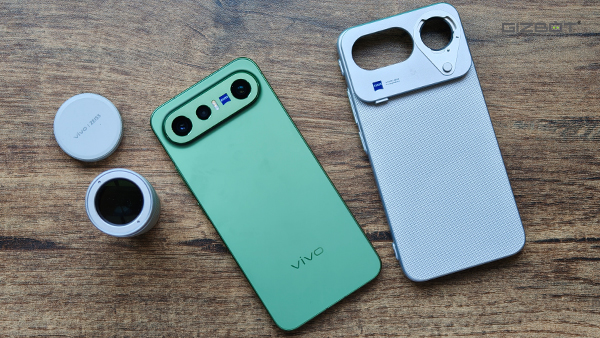
The Street Photography Mode launches in under a second from a locked screen and shoots in 14-bit black and white, with noticeably more tonal depth than standard processing. The optional Telephoto Extender Gen 2 - sold separately - brings the telephoto to a 200mm equivalent, and the difference at 20x is visible in texture and detail that digital processing alone can't produce. And I personally love shooting the streets, so I can vouch that this comes in very handy when it comes to shooting on the go where you are not prepared for what you could see next.
I clicked plenty of shots using this, and it captures motion beautifully. Backed by the quick post processing that enhances colours and details even more to make it look like a professional grade shot.
Night photography is competitive. Indoor and party shots with the adaptive flash system are noticeably better than most phones at this price - the flash adjusts its spread based on focal length, so you get natural fill rather than harsh centre lighting. One honest weakness: lens flare in backlit conditions. Shooting directly into a bright light source degrades the image visibly. It will come up.
Video goes to 4K/120fps on the rear and 8K/30fps if needed. The stabilisation even on 4K is quite good, when walking around at a fast pace. The front camera can do 4K 60fps maximum, which great if you want to vlog. However, at 4k 60fps, you cannot switch between the rear and front cameras once the recording is on. This can only be done at 4k 30fps and below. The microphone quality is excellent, it separates noise very easily even on a busy road.


vivo X300 FE: Battery
6,500mAh. One hour to full charge on 90W wired. 40W wireless charging is new over the X200 FE and actually fast enough to matter - an hour on a wireless pad gives you a full battery, not just a top-up.
In Jaipur, shooting all day with navigation running and regular file sharing, the phone ended each evening at 20-30%. Under lighter use, it stretches to a day and a half. But I wasn't using a SIM card in the phone at that time - so expect an additional 10% loss on top of this at max.
vivo X300 FE: Software and Features
OriginOS 6 on Android 16 is one of the less annoying Android skins available (which Vivo worked on recently). The floating capsule near the camera notch shows live updates from background apps - navigation, music, delivery status - without pulling you out of whatever you're doing. Drag-and-drop across apps works well for anyone moving content between multiple places.
The desktop integration covers both Windows and Mac: phone mirroring, file transfer up to 5GB per day, notification sync, and remote PC control from your phone. Private Space creates a fully encrypted, separate partition with its own fingerprint or password - for anyone carrying sensitive data, it's a useful feature rather than a checkbox.
Although it's been years in the making, OriginOS is still maturing in some aspects. Right now, it looks very inspired from iOS (not a deal breaker) but I would love it if Vivo can follow more minimalism, omit the less used extras after some time and keeps up with the useful AI integration. I like the track Vivo has taken, I just hope it matures the same way their camera technology has grown over the years.
vivo X300 FE: Value for Money
The X300 FE is the phone that people who want a complete compact phone have been waiting for. It doesn't use its size as an excuse to cut corners, and the camera system - particularly in portrait work - is the best I've seen from a phone at this price. Two days in Jaipur settled that question. The chipset is a fair criticism, but it's a market problem, not a product failure. Everything else earns its price.
The OPPO Find X9s is the most obvious upcoming competition. It hasn't arrived yet, but when it does, the overlap will be significant. Against current competition, the X300 FE's camera - particularly portraits and flash performance - outperforms the iPhone 17 and Galaxy S26 in real-world use. The battery-to-size ratio is better than either. IP68 and IP69 together beats the Galaxy S26's single rating.
vivo X300 FE: Verdict
- Camera is your priority
- You want a pocketable phone
- You travel and shoot a lot
- You need long software support
- Upgrading from 2+ year old phone
| Attributes | Notes | Rating |
|---|---|---|
| Design and Build | Excellent build, compact | 5/5 |
| Display | Good for one handed use, excellent colours | 4.8/5 |
| Performance | 4/5 | |
| Camera | Triple camera setup tuned by Zeiss | 4.5/5 |
| Battery | 6500mAh battery, easily lasts one day | 4.5/5 |
| Software and Features | Origin OS 6 based on Android 16 | 4/5 |
| Value for Money | Is it worth the asking price? | 3.5/5 |
-
 1,29,999
 -
 22,999
 -
 64,999
 -
 99,999
 -
 29,999
 -
 39,999
 -
-
 63,999
 -
 1,56,900
 -
 96,949

-
 1,39,900
 -
 1,29,900
 -
 79,900
 -
 65,900
 -
 12,999
 -
96,949
-
 16,499
 -
 38,999
 -
 30,700
 -
 49,999
-
 19,999
 -
 17,970
 -
 21,999
 -
 13,474
 -
 18,999
 -
 22,999
 -
 19,999
 -
 17,999
 -
 26,999
 -
 5,999
5,999
-1763362932432.svg)

 Continue with Google

