


 Click it and Unblock the Notifications
Your Next Smartwatch Could Track You to the Nearest Centimeter — Here’s Why That’s a Big Deal

Imagine your smartwatch not just knowing which street you’re running on, but which side of the street you’re on. That level of precision — down to a few centimeters — isn’t some futuristic promise.
It’s already happening, thanks to a research team in New Zealand that’s found a way to make smartwatch location tracking dramatically more accurate.

Smarter GPS Starts With Smarter Math
Researchers at the University of Otago, working with Google’s Android team and the Chinese Academy of Sciences, have developed algorithms that can fine-tune a smartwatch’s GPS accuracy to within about eight centimeters. That’s roughly the width of the watch’s screen.
They pulled this off by combining data from multiple global navigation satellite systems and feeding it through Google’s GnssLogger app. In one test, a smartwatch sitting still for four hours managed to repeatedly locate itself within that tiny eight-centimeter window — something that used to require bulky survey-grade GPS gear worth thousands of dollars.
Why This Matters for Everyday Users
If you’ve ever used a smartwatch to track a run, you’ve probably seen your route zigzag slightly, even when you’re running in a straight line. That’s GPS error — and it’s usually accurate only to a few meters. What these researchers achieved shrinks that margin to the size of your hand.
Now think about what that means. Fitness tracking could finally show the exact route you ran, not a rough sketch. Cycling and hiking data would be far more reliable. Even safety features like fall detection or SOS alerts could send rescuers to your exact spot instead of a general area.
The Tech Behind It
Here’s where it gets interesting. This isn’t about adding new hardware or massive antennas to your smartwatch. It’s about smarter algorithms that use existing GPS signals more effectively — especially the so-called “carrier-phase” signals, which measure waves rather than just timing. These signals have always been there, but only high-end professional devices had the power and precision to use them properly.
Associate Professor Robert Odolinski, who led the study, explained that this is really just the start of what wearables can do. For decades, centimeter-level accuracy was locked behind expensive gear. But with today’s processors and power-efficient chips, even consumer devices can start catching up.
What Comes Next
Of course, there are still challenges. More precision often means more power draw, and nobody wants their smartwatch battery dying halfway through a workout. Plus, processing those satellite signals takes computing power, which could drive up the cost of future devices.
But if companies like Google or Samsung decide to integrate this research into their next-gen wearables, it could change how we think about what a smartwatch can do. We’re talking about turning a wrist gadget into a professional-grade positioning tool — something useful not just for runners or hikers, but for mapping, navigation, and maybe even augmented reality.
As Odolinski put it, “This is just the beginning.” And if he’s right, our wrists might soon carry more precise navigation tech than entire survey teams once did.
-
 54,999
 -
 99,999
 -
 1,44,900
 -
 89,998
 -
 46,500
 -
 57,998
 -
 53,989
 -
 1,59,999
 -
 1,29,999
 -
 99,999
-
 70,499
 -
 1,56,900
 -
 1,30,990
 -
 17,084
 -
 16,999
 -
 30,999
 -
 9,999
9,999 -
 79,900
 -
 8,999
8,999 -
 79,999
-
 20,999
 -
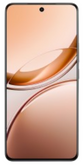 37,999
 -
 25,999
 -
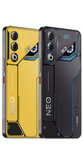 31,999
 -
 24,999
 -
 10,999
 -
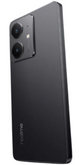 15,999
 -
 45,999
 -
 19,499
 -
 1,61,999
-1763362932432.svg)

 Continue with Google

