


 Click it and Unblock the Notifications
A Brief History of the Internet: Where it began and how it has progressed?

Just like the industrial revolution greatly improved the lives of people, so has the internet revolution. Today, the modern world would be lost without the internet as it has greatly impacted the lives of individuals.
The internet has become an integral part of our lives, changing the way we shop, socialise, and work. Turning back the clock, let's look at some key landmarks in the evolution of the internet from what it was to what it has become.

The Birth of the Internet
The development of the Advanced Research Projects Agency Network (ARPANET) took place in the late 1960s. It was initiated by the United States Department of Defense with the purpose of creating a network that could connect computers located at different universities and research institutions. This network enabled these entities to share information among themselves.
TCP/IP: The Foundation of the Internet
In the early 1970s, Vinton Cerf and Robert Kahn developed TCP/IP (Transmission Control Protocol/Internet Protocol), which provided a standardized method for data transmission between different types of computer networks. This protocol became the foundation for what we now know as the internet.
Email and Usenet: The Early Communication Tools
During the late 1970s and early 1980s, email emerged as one of the first widely used internet applications. Ray Tomlinson is credited with inventing email in 1971. Around the same time, Usenet was created, which allowed users to participate in online discussion forums.
The World Wide Web Revolutionizes Information Sharing
Invented by Sir Tim Berners-Lee in 1989, the World Wide Web (WWW) brought a significant breakthrough to how information was shared on the internet. With its hypertext system and web browsers like Mosaic and Netscape Navigator, accessing web pages became user-friendly.
The Dot-Com Boom and E-Commerce
In the mid-1990s, the internet experienced a massive surge in commercialization. Companies like Amazon and eBay emerged, pioneering e-commerce. This period, known as the dot-com boom, saw an explosion of online businesses and investments in internet-related startups.
Broadband Internet: Faster Connections for All
With advancements in technology, broadband internet became widely available to households during the late 1990s and early 2000s. This high-speed connection allowed users to access multimedia content seamlessly and paved the way for streaming services like Netflix and YouTube.
Mobile Internet: The Rise of Smartphones
The introduction of smartphones revolutionized how people accessed the internet. With mobile data plans becoming more affordable, browsing websites, using social media apps, and accessing emails on-the-go became commonplace activities worldwide.
Internet of Things (IoT): A Connected World
The IoT refers to a network of interconnected devices that can communicate with each other via the internet. From smart homes to wearable devices, IoT has transformed various aspects of our lives by enabling automation and remote control over connected devices.
The Future of the Internet
As technology continues to evolve, the internet will undoubtedly play a crucial role in shaping our future. With concepts like artificial intelligence, virtual reality, and 5G connectivity on the horizon, the possibilities for innovation and advancement are endless.
-
 54,999
 -
 99,999
 -
 1,44,900
 -
 89,998
 -
 46,500
 -
 57,998
 -
 53,989
 -
 1,59,999
 -
 1,29,999
 -
 99,999
-
 70,499
 -
 1,56,900
 -
 1,30,990
 -
 17,084
 -
 16,999
 -
 30,999
 -
 9,999
9,999 -
 79,900
 -
 8,999
8,999 -
 79,999
-
 20,999
 -
 37,999
 -
 25,999
 -
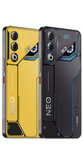 31,999
 -
 24,999
 -
 10,999
 -
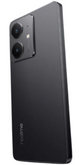 15,999
 -
 45,999
 -
 19,499
 -
 1,61,999
-1763362932432.svg)

 Continue with Google

