


 Click it and Unblock the Notifications
Did A Factory Reset Before Selling Your Phone? It Might Not Be Enough

Almost everyone in India does the same thing before selling an old phone. You back up your photos, sign out of nothing in particular, go into settings, tap factory reset, watch the little Android or Apple logo spin, and hand over a phone that feels brand new and blank. The problem is that a clean looking phone and a clean phone are not always the same thing, and a new consumer survey suggests a lot of us are quietly getting this wrong.

According to a Cashify survey of 8,000 smartphone users, 83.3 percent perform a factory reset before they sell or exchange a device. That is the reassuring part. The uncomfortable part sits right next to it. About 41.1 percent of those same people admit they are not sure a factory reset actually deletes everything, and a striking 31 percent say they have personally managed to recover data from a phone that had supposedly been wiped. So one in three people who tried to pull data off a reset phone succeeded. If that does not make you pause before your next upgrade, it should.
What a factory reset really does, and what it does not
Here is the part nobody explains at the store counter. On most modern smartphones, a factory reset is genuinely secure, but for a reason most people never hear about. Today's phones encrypt your data by default. Every photo, chat and saved password is scrambled using a key that lives on the device. When you factory reset a modern, encrypted phone, the system throws away that key. Without the key, whatever is left on the storage chip is just unreadable noise. Security people call this cryptographic erasure, and it is why Apple is comfortable telling you that once an iPhone is erased, getting the data back is practically impossible.
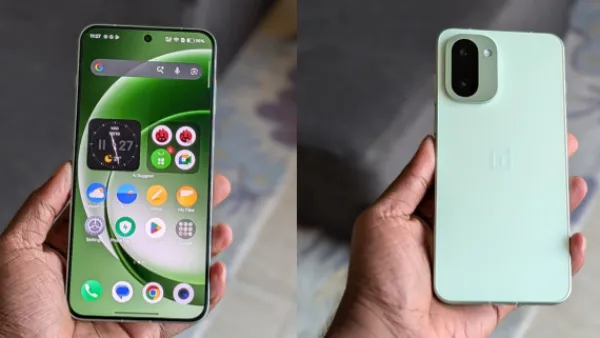
So if your phone is reasonably recent, why does that 31 percent recovery number even exist? A few reasons, and they matter. Factory reset is not a single standardised process across the Android world. Apple controls its erase routine tightly, but Android phone makers are free to reset their own way, and some do a thorough cryptographic wipe while others mostly just delete the file references and mark the storage as free for reuse. In that second case the raw data sits in unallocated memory until something happens to overwrite it, which means recovery software can sometimes claw it back. Add older or budget phones that were never properly encrypted to begin with, and you have a real pool of devices where a casual reset leaves a trail. This is exactly the kind of inconsistency that keeps that anxiety alive even as awareness grows.
The bigger leak is not your storage, it is your accounts
There is a second blind spot that has nothing to do with bits on a chip. Even a perfectly wiped phone can betray you if you forget to log out of the accounts tied to it. Your Google or Samsung or Mi account, your WhatsApp linked to a cloud backup, an eSIM still active, a microSD card you forgot to pop out. A reset clears the phone, but it does not always sever the cloud connections, and it can leave you tangled in activation locks that turn a simple sale into a support nightmare for the buyer. The safest sale is one where you have walked the phone out of your digital life completely, not just emptied its drawers.
The actually-safe way to wipe your phone before selling
None of this needs to be intimidating. A few extra minutes closes almost every gap.
Start by backing up anything you want to keep, because everything below is designed to be irreversible. Next, sign out of every account on the device. On Android that means removing your Google account and any brand account like Samsung or Mi, which also clears Factory Reset Protection so the buyer is not locked out later. On an iPhone, sign out of your Apple ID and switch off Find My iPhone, which lifts Activation Lock. Then physically remove your SIM or delete the eSIM profile, and take out any microSD card, since those are storage the reset will not touch. Unpair smartwatches and unlink WhatsApp from the device.
Only now do you run the factory reset from inside Settings rather than from a third party tool, so the phone uses the manufacturer's own erase routine. On modern encrypted phones this is enough for the vast majority of people. If you are extra cautious, or selling an older or budget Android that you are not sure was ever encrypted, there is a simple trick. After the reset, set the phone up with a throwaway account, fill the storage with junk such as large videos or a few big file downloads until it is nearly full, and reset it one more time. Overwriting the free space like this makes any residual fragments far harder to recover.
If you would rather not deal with any of this yourself, organised resale platforms are increasingly the reason the survey shows people leaning toward certified deletion, and we will get into what that certificate is actually worth in a separate piece. But whether you sell to a platform or hand the phone to a relative, the principle is the same. Treat factory reset as the last step in wiping your phone, never the only one.
-
 54,999
 -
 99,999
 -
 1,44,900
 -
 89,998
 -
 46,500
 -
 57,998
 -
 53,989
 -
 1,59,999
 -
 1,29,999
 -
 99,999
-
 70,499
 -
 1,56,900
 -
 1,30,990
 -
 17,084
 -
 16,999
 -
 30,999
 -
 9,999
9,999 -
 79,900
 -
 8,999
8,999 -
 79,999
-
 20,999
 -
 37,999
 -
 25,999
 -
 31,999
 -
 24,999
 -
 10,999
 -
 15,999
 -
 45,999
 -
 19,499
 -
 1,61,999
-1763362932432.svg)

 Continue with Google

