


 Click it and Unblock the Notifications
Xiaomi 17 vs Vivo X300 vs OPPO Find X9: Which Non-Pro Flagship Should You Pick?

The Xiaomi 17 recently debuted in India alongside the Xiaomi 17 Ultra. However, our focus here is on the standard model, designed for users who want a no-compromise flagship.
It's not the only device in this segment, as phones like the Vivo X300 and OPPO Find X9 are also true flagships that bring impressive features. However, the Xiaomi 17 is more expensive compared to the other two models. So, let's take a look at our comparison of these three devices to help you understand which one you should pick and whether the higher price tag of the Xiaomi 17 actually makes sense.

Xiaomi 17 vs Vivo X300 vs OPPO Find X9
| Feature | Xiaomi 17 | Vivo X300 | OPPO Find X9 |
|---|---|---|---|
| Display | 6.3-inch OLED, 2656 × 1220 resolution, 120Hz adaptive refresh rate, up to 3,500 nits peak brightness, HDR10+ & Dolby Vision | 6.3-inch 1.5K LTPO AMOLED, 1216 × 2640 resolution, 1-120Hz adaptive refresh rate, up to 4,500 nits peak brightness | 6.5-inch 1.5K LTPO AMOLED, 1256 × 2760 resolution, 1-120Hz adaptive refresh rate, up to 3,600 nits peak brightness |
| Processor | Snapdragon 8 Elite Gen 5 | MediaTek Dimensity 9500 | MediaTek Dimensity 9500 |
| Software | Android 16, HyperOS 3 | Android 16, OriginOS 6.0 | Android 16, ColorOS 16 |
| Camera | 50MP (Light Fusion 950) + 50MP telephoto (60mm, OIS) + 50MP ultra-wide; 50MP front; 8K 30fps, 4K Dolby Vision 60fps | 200MP Samsung ISOCELL HPB + 50MP ultra-wide + 50MP telephoto (OIS); 50MP front; 4K 120fps | 50MP Sony LYT-808 + 50MP ultra-wide + 50MP periscope (3x OIS) + 2MP multispectral; 32MP front; 4K 120fps Dolby Vision |
| Battery & Charging | 6,330mAh, 100W wired, 50W wireless | 6,040mAh, 90W wired, 40W wireless | 7,025mAh, 80W wired, 50W wireless |
| Weight | 191g | 190g | 203g |
| Build & Protection | Aluminium frame, Xiaomi Shield Glass 3.0, IP68/IP69 | Matte glass back, IP68/IP69 | Matte glass back, IP68/IP69 |
| Price (Starting) | ₹89,999 | ₹75,999 | ₹74,999 |
Price
The Xiaomi 17 comes with a starting price of ₹89,999, making it the most expensive option among the three. In comparison, the Vivo X300 starts at Rs 75,999, while the OPPO Find X9 is slightly more affordable with a starting price of Rs 74,999.
Design and Display
All three models feature a compact design. The Xiaomi 17 and Vivo X300 share a similar 6.3-inch display size, while the OPPO Find X9 offers a slightly larger 6.5-inch panel.
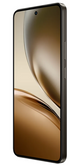
The latest Xiaomi 17 comes with ultra-thin bezels enabled by advanced LIPO manufacturing, along with Xiaomi's refined Golden Arc design. This allows the display to stretch edge-to-edge while ensuring the device sits comfortably in the palm. At 191g, it is the lightest in this lineup. The Vivo X300 weighs 190g, while the OPPO Find X9 is the heaviest of the three at 203g. The Xiaomi 17 also features the Xiaomi Guardian Structure, which combines a strengthened aluminium frame with Xiaomi Shield Glass 3.0 for added durability.

Both the Vivo and OPPO phones come with a matte glass back finish, giving them a premium in-hand feel. All three devices also offer IP68 and IP69 ratings for dust and water resistance.
All three smartphones offer an adaptive refresh rate of up to 120Hz, but there are differences in resolution and brightness. The Xiaomi 17 supports a 2,656 × 1,220 resolution and delivers up to 3,500 nits of peak brightness.
The OPPO Find X9 comes with a slightly larger 1.5K LTPO AMOLED display with a resolution of 1256 × 2760 pixels. It also offers a higher peak brightness of up to 3,600 nits.
Meanwhile, the Vivo X300 also features a 1.5K LTPO AMOLED panel with a resolution of 1216 × 2640 pixels. However, it stands out with a peak brightness of up to 4,500 nits, making it the brightest display among the three.
Performance and Software
The Xiaomi 17 is powered by the Snapdragon 8 Elite Gen 5 chipset. On the other hand, both the Vivo X300 and OPPO Find X9 are powered by the MediaTek Dimensity 9500 SoC.
Both chipsets are powerful in their own right. The Snapdragon 8 Elite Gen 5 is claimed to be Qualcomm's most powerful mobile platform yet. Meanwhile, MediaTek's Dimensity 9500 focuses on addressing two key user concerns: reducing battery drain during heavy usage and enabling advanced on-device camera intelligence without relying heavily on software updates.
You can also read our detailed comparison of the two chipsets for a closer look at how they stack up against each other.
Moreover, all three phones run on Android 16 with their respective custom skins - HyperOS 3 on Xiaomi, OriginOS 6.0 on Vivo, and ColorOS 16 on OPPO.
The Xiaomi 17 includes a new HyperAI suite that offers features such as AI writing, AI dynamic wallpapers, AI search, and several other AI-powered tools. The Vivo X300, meanwhile, brings advanced AI integration that is primarily focused on imaging and camera enhancements.
The OPPO Find X9 (Review) focuses more on personalized AI capabilities. OPPO has also partnered with Google to integrate the Mind Space app with Gemini, allowing Gemini to pull information and help users take action using content stored in Mind Space.

Camera
For optics, the Xiaomi 17 offers a Leica-tuned triple rear camera setup, comprising a 50MP primary camera with a 1/1.31-inch Light Fusion 950 sensor (OIS), a 50MP telephoto camera with a 60mm focal length (OIS), and a 50MP ultra-wide-angle sensor with a 102-degree field of view. On the front, it opts for a 50MP selfie camera with an f/2.2 aperture and a 90-degree field of view. The phone also supports 8K video recording at 30 fps and 4K Dolby Vision video recording at up to 60fps.
The OPPO Find X9 also offers a triple-camera system, including a 50MP Sony LYT-808 primary sensor (f/1.6, OIS), a 50MP Samsung JN5 ultra-wide lens (f/2.0), and a 50MP Sony LYT600 periscope telephoto camera with 3x optical zoom and OIS. Additionally, it includes a 2MP multi-spectral sensor. For selfies, the phone features a 32MP Sony IMX615 front camera (f/2.4). It supports 4K video recording at 120fps in Dolby Vision.
The Vivo X300 comes with ZEISS optics and the V3+ imaging chip. It has a 200MP Samsung ISOCELL HPB primary sensor (f/1.68, OIS), a 50MP Samsung ISOCELL JN1 ultra-wide lens (f/2.0), and a 50MP Sony IMX602 telephoto lens (f/2.57, OIS). Upfront, it gets a 50MP Samsung ISOCELL JN1 selfie camera with autofocus. The device supports 4K video recording at 120fps.
So, both the Xiaomi 17 and the Find X9 could be the best for videography, while the Vivo X300 offers the most advanced camera hardware.
Battery
The Xiaomi 17 packs a 6330mAh battery that supports 100W HyperCharge wired charging and 50W wireless charging. The OPPO Find X9 leads in the battery segment with a massive 7,025mAh unit. It also supports 80W wired charging and 50W wireless charging.
Lastly, the Vivo X300 packs a 6,040mAh battery with 90W wired charging and 40W wireless charging. If battery life is your top priority, the OPPO Find X9 would be the best choice. However, if you want the fastest wired charging speeds, the Xiaomi 17 is the better option.
Conclusion
The Xiaomi 17 is a well-balanced compact flagship that packs powerful features across performance and camera. If photography is your top priority, the Vivo X300 could be the better choice.
However, the OPPO Find X9 also offers impressive videography capabilities, like the Xiaomi 17, making it a solid option for users who prioritize video recording. Overall, if budget isn't a concern, you can go for the Xiaomi 17. Stay tuned with us for our full review.
-
 54,999
 -
 99,999
 -
 1,44,900
 -
 89,998
 -
 46,500
 -
 57,998
 -
 53,989
 -
 1,59,999
 -
 1,29,999
 -
 99,999
-
 70,499
 -
 1,56,900
 -
 1,30,990
 -
 17,084
 -
 16,999
 -
 30,999
 -
 9,999
9,999 -
 79,900
 -
 8,999
8,999 -
 79,999
-
 20,999
 -
 37,999
 -
 25,999
 -
 31,999
 -
 24,999
 -
 10,999
 -
 15,999
 -
 45,999
 -
 19,499
 -
 1,61,999
-1763362932432.svg)

 Continue with Google

