


 Click it and Unblock the Notifications
Samsung Galaxy Z Fold8 Review: Small When Shut, Big Where It Counts

When the Z Fold7 came out, I said it was the best foldable ever made by Samsung, or by anyone else for that matter. But the moment I laid my hands on the new Fold8, I felt something I had been missing in smartphones for a long time now. Smartphones stopped feeling exciting years ago. This one felt like the refreshing change I had been craving.
In that moment, I was not thinking about value for money, or how good the cameras are, or anything else. I was simply appreciating the feel of it in my hand, the inner and cover displays, and how naturally the software shaped the whole experience. But now, after almost three weeks of living with it, I have a clearer picture of the goods and the bads, and more importantly, whether the bads are ignorable for what this phone offers as an overall experience.

Samsung Galaxy Z Fold8 Review: Two-Minute Review
The Galaxy Z Fold8 is not a successor to the Fold7 in the traditional sense. It is a new idea altogether. Samsung has moved away from the tall, narrow foldable formula and built a shorter, wider phone that sits in the hand like a passport. The cover display is a 5.5-inch panel in a 10:16 ratio that you can actually type on with one hand, and the inner display is a 7.6-inch 4:3 screen that feels closer to a small tablet than a stretched phone. That single design decision changes everything about how you use this device. For the first time in years of using Folds, I found myself opening the inner screen constantly, not because I had to justify the price, but because it was genuinely the better way to watch, read, and work.
At Rs 1,79,999, it is an expensive phone with some compromises. There is no telephoto camera, no S Pen support, and the IP48 rating trails the Pixel 10 Pro Fold's IP68. But the battery life is outstanding, the performance is flagship-grade thanks to the Snapdragon 8 Elite Gen 5 for Galaxy, and the form factor is the most meaningful change any mainstream foldable has attempted in years. Whether that trade-off works for you depends entirely on what you want from a phone at this price, and I will be honest about both sides of that argument.
Samsung Galaxy Z Fold8 Review: Design and Build
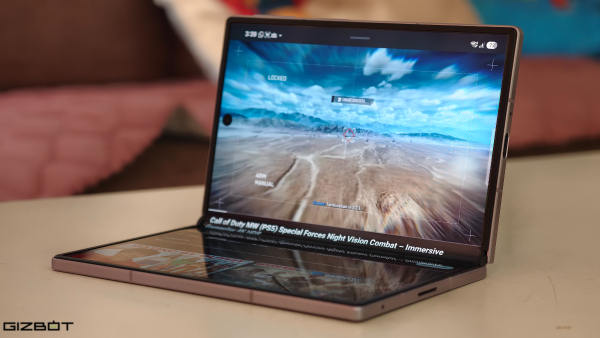
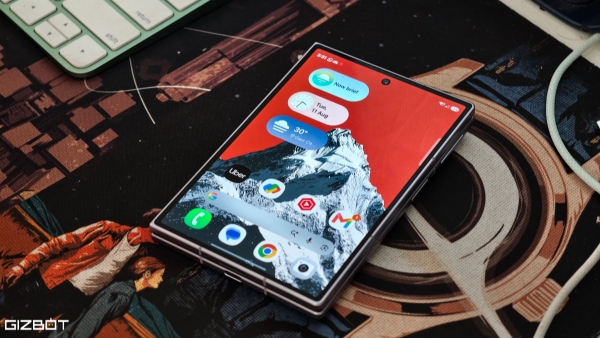
The first thing anyone does with the Fold8 is turn it over in their hand a few times, and the reaction is nearly always the same. It does not feel like a Fold. At 201g, it is the lightest foldable Samsung has ever made, lighter than plenty of regular flagships, and at 9.7mm folded and 4.5mm unfolded, it disappears into a pocket in a way earlier Folds never did. The wider cover screen is the quiet hero here. On previous Folds, the outer display always felt like a remote control you tolerated until you could unfold the phone. On the Fold8, the 5.5-inch 10:16 cover screen is a proper phone in itself. Typing with one hand works, reaching corners works. You could use this phone folded all day and never feel shortchanged.
But you will not, because the inner display is the reason this phone exists. The 7.6-inch 4:3 panel is a Dynamic AMOLED 2X unit with 120Hz refresh, 3,000 nits of peak brightness and an anti-reflective coating that holds up well under harsh Indian sunlight. Open it in landscape and YouTube videos fill the screen with barely any letterboxing. Turn it to portrait and reading long articles, PDFs and Kindle books feels natural in a way no phone screen has before. Over three weeks, this became my default reading and streaming device, and my tablet has not left the drawer since.
The Flex Titanium hinge deserves its own mention. The crease is still there if you go looking for it at an angle, but in normal use it has effectively vanished, and the hinge snaps open with a confidence that makes the whole phone feel more solid than its weight suggests. The one casualty of this new hinge is Flex Mode. The Fold8 does not hold a half-open laptop position anymore, and if you were someone who propped up older Folds for video calls or timelapses, you might still be able to hold it half-way with extra efforts. The camera bump also makes the phone wobble on a desk without a case, which is a small issue that's seen on most flagship phones that are slim.
The inner screen can be used in both orientations with ease depending on what you're doing on the phone. However, you will have to get used to the button placements as it will change when you rotate it.
Samsung Galaxy Z Fold8 Review: Performance
India gets the Snapdragon 8 Elite Gen 5 for Galaxy on the Fold8, the same chip as global units, with 12GB of RAM on the 256GB and 512GB variants and 16GB on the 1TB model. After the long-running frustration of Exynos variants landing in India on other Galaxy lines, this is worth stating plainly. There is no regional compromise here, and the performance shows it. Apps launch instantly, split-screen multitasking is fluid, and games run at settings you would expect from any 2026 flagship.
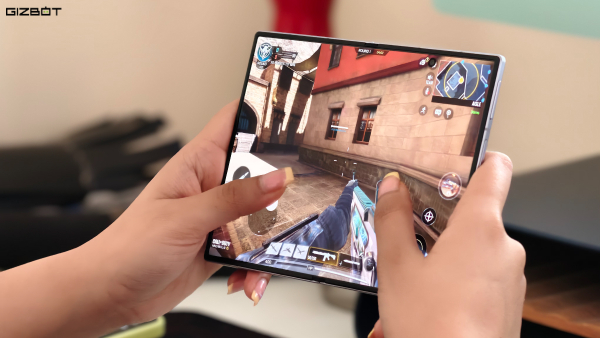
In my usage through Delhi's August heat, the phone stayed comfortable through regular work, streaming and photography, but sustained gaming or navigation while folded made the frame bearably warm, and I saw the screen dim itself on a couple of occasions outdoors. The thin chassis leaves no room for a vapour chamber, and while this never became a dealbreaker for me, heavy gamers should factor it in.
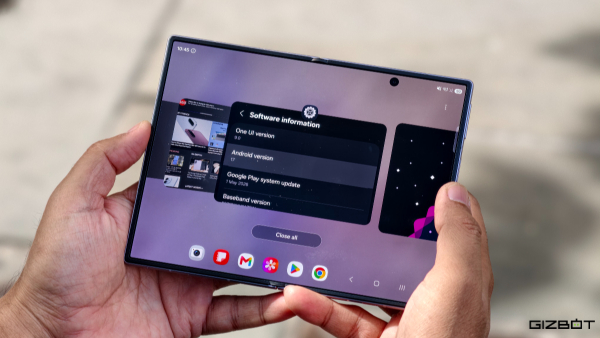
One UI 9 on Android 17 is the best foldable software Samsung has shipped. Two-finger swipe for split screen, floating windows from a corner swipe, and notifications that appear as overlays on the big screen rather than hijacking it all add up to software that finally feels designed for this shape. Gmail, WhatsApp and Outlook use proper dual-pane layouts. Quick Share now working with Apple's AirDrop is a genuinely useful addition in mixed-device households. The gap remains third-party apps, including some of Google's own, which occasionally need a restart after unfolding to draw correctly. Samsung's promise of seven years of OS and security updates, taking this phone to around 2033, is the strongest commitment in the foldable space.
Samsung Galaxy Z Fold8 Review: Camera
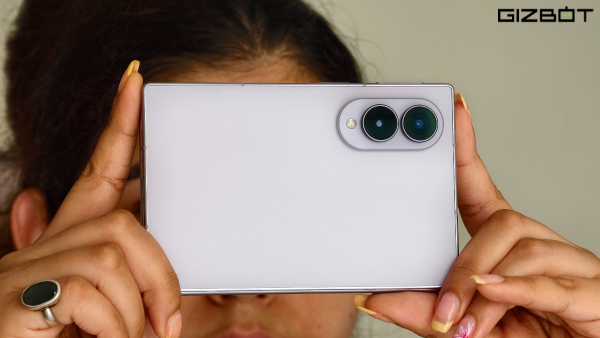
This is where the Fold8's positioning for its price gets uncomfortable. You get a 50MP main sensor with OIS and a 50MP ultrawide with a 120-degree field of view, plus 10MP selfie cameras on both the cover screen and inside the inner display. What you do not get is a telephoto lens of any kind. The 2x crop zoom from the main sensor is genuinely close to optical quality, and 4x results are usable in good light, but 10x is a stretch and anything beyond that is not worth attempting.
In daily shooting, the main camera is reliable. Colours lean towards Samsung's familiar punchy tuning, though HDR is handled with more restraint than before, and daylight shots have the kind of consistency you expect from a Samsung flagship. The ultrawide is a welcome and capable second lens with minimal distortion at the edges, and it holds colour and exposure close to the main sensor, which is not something every dual-camera phone manages.
Portraits are a pleasant surprise given there is no dedicated telephoto to lean on. The 2x crop from the main sensor is the default portrait focal length, and edge detection around hair, spectacles and busy backgrounds is handled cleanly most of the time. Skin tones stay natural rather than over-brightened, which matters for Indian complexions where aggressive processing often goes wrong. Push to 4x portraits and the software does a respectable job in good light, though you can see the digital stretching if you look closely.
Night photography is where the missing hardware shows up more honestly. The main sensor with OIS pulls in impressive detail after dark, night mode shots of streets and buildings come out clean with well-controlled highlights from streetlights and signage, and noise is kept in check. The ultrawide is noticeably weaker at night, with softer detail and more noise creeping into the shadows, and any zoom beyond 2x after sunset is best avoided. For social media and casual low-light shooting, the Fold8 delivers without hesitation. For serious night photography, the S26 Ultra remains a class apart.
Video is arguably stronger than stills. Recording goes up to 8K at 30fps, though 4K at 60fps is the sweet spot for most people, with excellent stabilisation from the super steady mode and a horizon lock feature that keeps footage level even when you are walking. Dual recording from front and rear cameras simultaneously is genuinely useful for events and vlogging-style content, and the auto-tracking FanCam mode, which follows a subject and reframes on its own, works better than I expected at concerts and family functions. Audio capture is clean, and the big inner screen doubles as the best video monitoring experience on any phone. The inner hole-punch camera occasionally sits over a menu button or subtitle while shooting or reviewing footage, which you learn to live with.
But context matters. At Rs 1,79,999, this phone costs more than a Galaxy S26 Ultra and shoots worse than one. If your buying decision is weighted towards photography, particularly zoom photography for weddings, events and travel, the Fold8 is not the right phone, and Samsung knows it, which is why the Fold8 Ultra with its 200MP main sensor and 3x optical telephoto exists Rs 20,000 above this.

Samsung Galaxy Z Fold8 Review: Battery
I went into this review expecting battery life to be the compromise I would have to talk around. It turned out to be the single most impressive thing about living with the Fold8. This is Samsung's first phone with a silicon-carbon battery, a 4,800mAh cell squeezed into a 4.5mm-thin unfolded body, and it comfortably outperforms what the numbers suggest. Let me give you actual data from my unit rather than vague impressions. Samsung's battery estimate on my Fold8 consistently reads a full charge lasting about 1 day and 11 hours, and my real-world usage backs that up. In one stretch, I topped up to just 51 per cent, and more than four hours of active use later, the phone had consumed only 23 per cent while still projecting nearly ten more hours of runtime from what was left. That is a phone sipping power from half a tank.
What makes this more remarkable is that this was not a gentle testing week. My daily battery consumption averaged 63 per cent this week against 49 per cent the week before, with camera testing, navigation and long stretches of video on the inner display, and the Fold8 absorbed all of it without ever leaving me hunting for a charger before midnight. Most of my screen time was on the big inner display, which should punish the battery, and it simply did not. Charging is 45W wired, which takes the phone to around 65 per cent in half an hour, along with 20W wireless and reverse wireless charging. The charger is not in the box, which remains an annoyance at this price.
The one asterisk is longevity. The Fold8's battery is rated for 1,200 charge cycles before dropping to 80 per cent capacity, down from 2,000 cycles on the Fold7, a known trade-off of silicon-carbon chemistry. At one charge a day, that is a little over three years before degradation becomes meaningful. Given how long Indian buyers hold on to premium phones bought at full price, it is worth knowing, even if the day-to-day endurance is the best I have experienced on a foldable.
Samsung Galaxy Z Fold8 Review: Value for Money
The Fold8 starts at Rs 1,79,999 for 12GB and 256GB, moves to Rs 1,99,999 for 512GB, and tops out at Rs 2,39,999 for the 16GB and 1TB variant. Launch offers include a Rs 10,000 upgrade bonus or up to Rs 9,000 in bank and UPI cashback, along with no-cost EMI stretching up to 30 months with select finance partners, and a bundled two-year Samsung Care+ plan. That last part matters more than it sounds, because foldable repairs remain punishingly expensive in India, with inner screen replacements on the previous generation costing upwards of Rs 45,000 out of warranty.
The competition makes this an interesting decision. The Pixel 10 Pro Fold at Rs 1,72,999 undercuts the Fold8 while offering an IP68 rating and a proper 5x telephoto lens. The Vivo X Fold5 and Motorola Razr Fold, both at Rs 1,49,999, offer bigger batteries, faster charging and triple camera systems for Rs 30,000 less. And the Fold8 Ultra sits just Rs 20,000 above with bigger displays, a 200MP camera system and optical zoom. None of these rivals, however, offer the passport form factor and the 4:3 inner screen, and after three weeks I can say with confidence that this shape is not a gimmick. It is the most usable foldable design anyone has shipped.
Samsung Galaxy Z Fold8 Review: Verdict
The Galaxy Z Fold8 made me feel something about a smartphone again, and I do not say that lightly after a decade of reviewing them. The form factor is a genuine breakthrough, the battery life is the best I have seen on a foldable, the displays are superb, and India getting the Snapdragon chip removes an old grievance. As a device to live with, it is a delight.
But at Rs 1,79,999, delight alone cannot be the whole argument, and I want to be straightforward with Indian buyers here. Buy the Fold8 if your phone is primarily a consumption and productivity device, if you read, stream, and multitask heavily, and if the idea of a pocketable mini tablet with two-day-capable battery life excites you enough to accept a camera system that a phone half its price can match on zoom. This is the phone for that person, and nothing else in India delivers this specific experience.
Skip it, or at least think hard, if photography drives your purchase, in which case the Fold8 Ultra or the S26 Ultra serve you better. Consider the Pixel 10 Pro Fold if you want better durability credentials and a telephoto at a lower price, or the Vivo X Fold5 and Motorola Razr Fold if you want strong foldable hardware at Rs 30,000 less. And if you are stretching your budget to reach this phone, the 1,200-cycle battery rating and the cost of foldable repairs beyond the bundled Care+ period are practical realities worth weighing before you swipe your card.
The Fold8 is the most exciting phone I have used in years. Whether it is the right phone for you at this price is a question only your priorities can answer, and for once, both answers are completely reasonable.
| Attributes | Notes | Rating |
|---|---|---|
| Design and Build | Design and Display | 4.8/5 |
| Performance | Performance and Software | 4.5/5 |
| Camera | Cameras | 3.8/5 |
| Battery | Battery Life | 4.7/5 |
| Value for Money | Price and Competition | 3.5/5 |
Who Should Buy the Galaxy Z Fold8?
The Galaxy Z Fold8 is best suited for users who want a phone and compact tablet in one device. It makes sense for people who read extensively, stream content, multitask frequently or use their phone for productivity. The wider cover display and 7.6-inch inner screen make everyday tasks more comfortable, while the excellent battery life and flagship Snapdragon 8 Elite Gen 5 performance add to its appeal. If you want the most refined foldable experience in India and are willing to pay ₹1,79,999 for a unique form factor, the Fold8 is an easy recommendation.
Who Should Skip the Galaxy Z Fold8?
You should consider skipping the Galaxy Z Fold8 if camera performance is your top priority. Its lack of a telephoto camera is difficult to overlook at this price, particularly when conventional flagship phones offer stronger zoom capabilities. Buyers who prioritise durability may also prefer alternatives with higher water and dust resistance. The Fold8 is also expensive to repair after its Care+ coverage ends. If you want a premium foldable but cannot justify ₹1,79,999, options such as the Pixel 10 Pro Fold, Vivo X Fold5 or Motorola Razr Fold may offer better value.
-
 1,29,999
 -
 22,999
 -
 64,999
 -
 99,999
 -
 29,999
 -
 39,999
 -
-
 63,999
 -
 1,56,900
 -
 96,949

-
 1,39,900
 -
 1,29,900
 -
 79,900
 -
 65,900
 -
 12,999
 -
96,949
-
 16,499
 -
 38,999
 -
 30,700
 -
 49,999
-
 19,999
 -
 17,970
 -
 21,999
 -
 13,474
 -
 18,999
 -
 22,999
 -
 19,999
 -
 17,999
 -
 26,999
 -
 5,999
5,999
-1763362932432.svg)

 Continue with Google

