


 Click it and Unblock the Notifications
Apple Secures Patent For “Spatial Composites”: Will iPhone Or Vision Pro Get Better Scratch-Resistance?

Apple has been granted a new patent for 'Spatial Composites' material by the US Patent and Trademark Office (US PTO). The patent hints at new materials that could offer exceptional scratch resistance.
The USPTO has granted a patent to Apple that mentions new composite materials. Some reports suggest Apple could use the materials for the back panels of iPhone, iPad, Apple Watch, and other Apple-branded electronics.
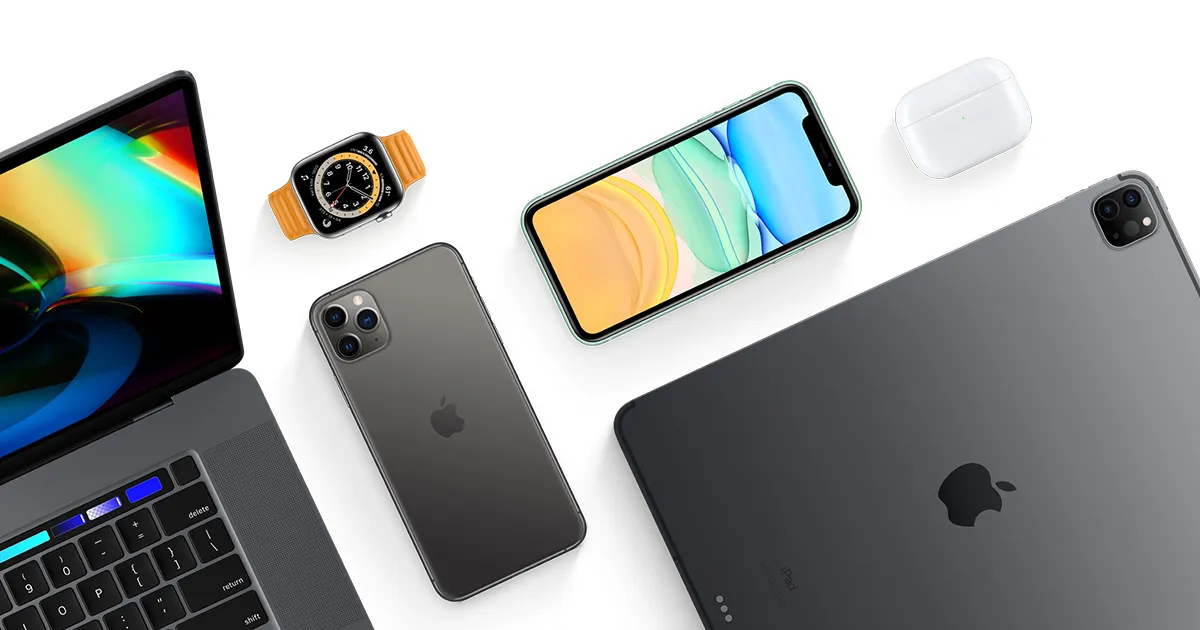
What Are Apple's Spatial Composite Substrates?
Apple's patent mentions abrasion-resistant members that are formed from metal or ceramic. It is essentially a layer that would be applied on surfaces that could be scratched.
The substrate must be a moldable matrix for smooth application on flat and contoured surfaces. The abrasion-resistant components in the substate would obviously be tougher than the moldable matrix.
The newly-granted patent revealed an average distance between the adjacent abrasion-resistant members is between 10 and 100 microns. Apple mentions various materials used in manufacturing smartphones and their respective scratch-resistance versus electromagnetic shielding.

The reasoning behind the patent is quite simple. While a plastic back doesn't interfere with radio connectivity, it's not as scratch-resistant as glass or treated metals. On the other hand, glass and metal are scratch-resistant but they hinder radio connectivity.
Apple has been actively looking at ceramic coatings. While ceramic doesn't hamper wireless connectivity and is scratch-resistant, it is brittle and comparatively weak. The US patent number 11,678,445 B2 covers Apple's 'Spatial Composites,' a metal and ceramic composite with scratch-resistant properties, superior durability, and minimal interference.
Will Apple Use Spatial Composite Layer To Protect iPhone, iPad, Vision Pro, And Other Devices?
Apple already has the Crystal Shield technology to protect the displays from scratches. Needless to say, this technology is meant for the screen as it is transparent.
Based on the Spatial Composites' description, the material would most likely be opaque or at best translucent. Hence, Apple's Vision Pro won't need the new materials that Apple could make as per the patent.
The new Spatial Composite material substrate could be applied on the back of iPhones, iPad, MacBook Air laptops, and other Apple products. The material could ensure that the back panel of these devices has exceptional scratch-resistant properties.
It is important to note that Apple files and secures several patents. However, not all patents transcend into actual products, at least for a few years. Simply put, the first iPhone with a Spatial Composite back panel may not arrive for a few years. Hence, iPhone users are strongly advised to take the utmost care and precaution with their smartphones to ensure they look and work great.
-
 54,999
 -
 99,999
 -
 1,44,900
 -
 89,998
 -
 46,500
 -
 57,998
 -
 53,989
 -
 1,59,999
 -
 1,29,999
 -
 99,999
-
 70,499
 -
 1,56,900
 -
 1,30,990
 -
 17,084
 -
 16,999
 -
 30,999
 -
 9,999
9,999 -
 79,900
 -
 8,999
8,999 -
 79,999
-
 20,999
 -
 37,999
 -
 25,999
 -
 31,999
 -
 24,999
 -
 10,999
 -
 15,999
 -
 45,999
 -
 19,499
 -
 1,61,999
-1763362932432.svg)

 Continue with Google

