


 Click it and Unblock the Notifications
Apple Vision Pro Sales Target Of 1 Million In First Month, Slashed Drastically Due To Production Issues

Apple recently unveiled the Apple Vision Pro, one of the most expensive wearable devices in the consumer electronics market. Although the iPhone maker has indicated the Mixed Reality headset will be available next year, production issues have forced the company to lower its sales estimates.
The Apple Vision Pro is by far one of the most advanced headsets to offer a seamless blend of Virtual Reality (VR) and Augmented Reality (Reality). However, its sophistication and complexity are proving troublesome during production.
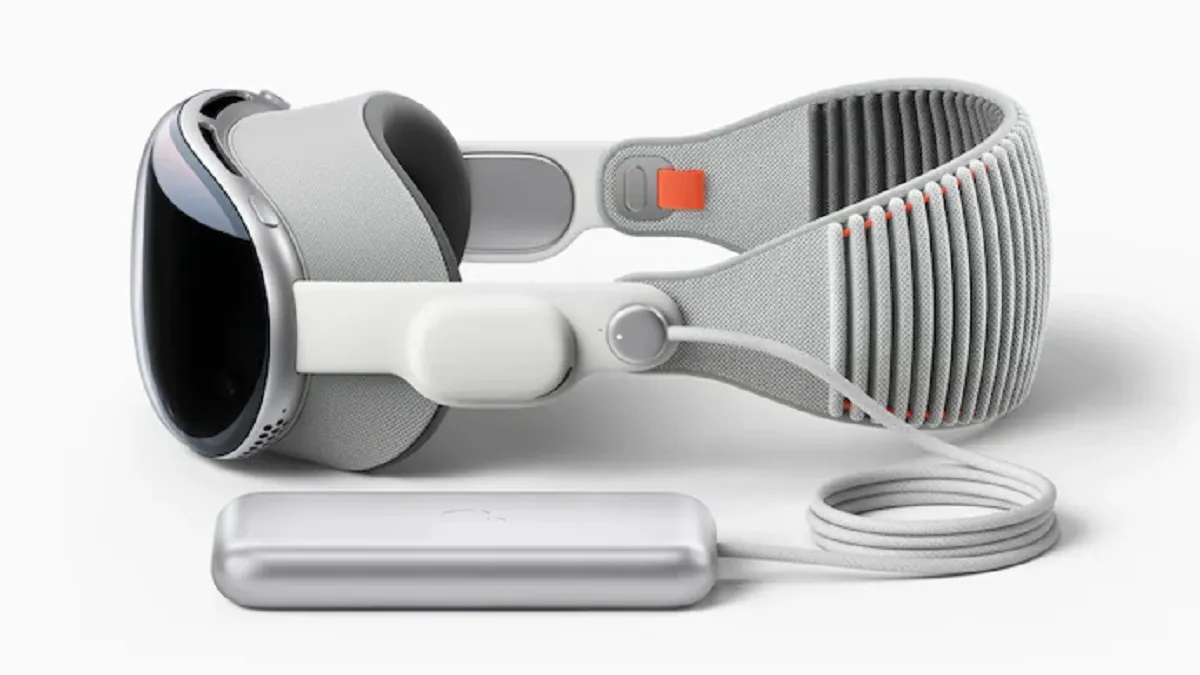
Apple Was Confident Of Selling A Million Units In The First Month Of Vision Pro Launch
The Apple Vision Pro is far more advanced than the Meta Quest line of VR headsets. In fact, it surpasses several AR/VR headsets that are meant primarily for businesses. The headset even boasts a price tag that's suitable for enterprise gear.
Despite the hefty $3499.99 price tag, Apple was reportedly quite confident that the Vision Pro would revolutionize the world of Mixed Reality. After all, it is powered by the new visionOS and would offer multiple optimized services and apps right from launch day.
Apple had reportedly set an internal target of selling 1 million units during the first month of availability. However, the company has slashed that target drastically.
According to the latest report by the Financial Times, Apple is hoping to sell less than 200,000 units in 2024. Incidentally, Apple is still confident about the demand for the Vision Pro.
Apple's Manufacturing Partners Struggling With Low Production Yields
Apple is reputedly facing issues with reliable production. Luxshare, which assembles the headset, could end up making less than 400,000 units in 2024. Two other component suppliers have reportedly received orders for only 130,000-150,000 units for 2024.
Simply put, Apple could end up making and selling less than 200,000 units of the Vision Pro headset in 2024. Some reports suggest Apple's insistence on embedding micro-OLED displays, is the primary reason for the low sales estimates.

The Apple Vision Pro headset has two micro-OLED displays, which are currently made by Sony and TSMC. Both manufacturers are reportedly struggling to increase yield. In other words, these manufacturers aren't able to churn out a large number of usable displays with the quality standards demanded by Apple.
Some recent reports had suggested that Apple is actively developing another iteration of the Vision Pro. It could be sold as the Apple Vision One and would be a toned-down version of the Vision Pro.
It is possible that Samsung or LG, or both, would supply mini-LED displays for the Apple Vision One. Needless to say, mini-LED displays are simpler to manufacture in large quantities compared to micro-LED screens.
-
 1,29,999
 -
 22,999
 -
 64,999
 -
 99,999
 -
 29,999
 -
 39,999
 -
-
 63,999
 -
 1,56,900
 -
 96,949

-
 1,39,900
 -
 1,29,900
 -
 79,900
 -
 65,900
 -
 12,999
 -
96,949
-
 16,499
 -
 38,999
 -
 30,700
 -
 49,999
-
 19,999
 -
 17,970
 -
 21,999
 -
 13,474
 -
 18,999
 -
 22,999
 -
 19,999
 -
 17,999
 -
 26,999
 -
 5,999
5,999
-1763362932432.svg)

 Continue with Google

