


 Click it and Unblock the Notifications
Samsung Galaxy S25 Edge Review: The Slimmest Flagship – But Is That Enough?

The Samsung Galaxy S25 Edge is arguably the boldest phone Samsung has released in years. After using it as my daily driver, I'm both impressed and conflicted. This device crams top-tier specs into an incredibly thin and light body, making it a real head-turner.
At the same time, that super-slim design forces a few compromises that are hard to ignore - especially given its premium price tag of over ₹1,09,999. In this first-person review, I'll share my experiences with the S25 Edge's design, performance, cameras, and battery life, blending my own usage impressions with insights.

- Ultra-slim Design
- Exclusive Feel
- Comfortable Grip
- Sleek Aesthetics
- Lightweight Body

- Short Battery
- Limited Cameras
- No Zoom Lens
- No Fast Charger
- High Price

Design and Build: Ultra-Slim Showstopper
The moment I unboxed the Galaxy S25 Edge, I was blown away by how sleek it is. At just 5.84 mm thin and 163g light, it's officially one of the slimmest and lightest phones in the world right now. For context, that's significantly thinner than most flagships today - you can almost lose it in a stack of magazines.
Samsung pulled out all the stops with materials to ensure this skinny phone doesn't feel flimsy. It has a titanium alloy frame and Gorilla Glass Ceramic 2 on the front (with Victus 2 at the back), plus an IP68 rating for water/dust resistance. In other words, the S25 Edge may be slim, but it's not delicate - it feels solid and premium, like a tiny piece of engineering art.

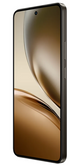
Visually, the phone is a stunner. The design is minimal and elegant (very much like the S25 Ultra), with a "floating" dual camera module on the back. I have to say - whipping this phone out of my pocket, I've caught people admiring it. If you value a phone that stands out in a crowd (or a boardroom), the S25 Edge nails that. No other current flagship offers this kind of ultra-thin design, and that uniqueness is its primary differentiator.
Of course, there's a flip side: the practicality of such thinness. The S25 Edge is extremely comfortable to carry - it slips into pockets almost too easily - but using it also made me slightly anxious. It's so thin that I worried I might snap it (even though logic says Samsung's sturdy build will hold up). And if you slap a case on it, you lose some of that wow factor; with a case, it no longer feels wafer-thin (just a normal slim phone). Still, naked or not, this design is what you're paying a premium for. It's a refreshing change in a world of chunky camera bumps and brick-like flagships. As I'll discuss later, though, a flashy design alone might not justify the price for everyone.
Performance and Thermals: Powerful, But Not for Marathon Gaming
On paper, the Galaxy S25 Edge packs no less power than its beefier siblings. Samsung didn't skimp on core specs: it's running the latest Snapdragon 8 Elite chip with 12GB of RAM, just like the S25 Ultra and Plus. This means day-to-day performance is flagship-grade. And indeed, in my experience the phone felt snappy and fluid. Apps launch quickly, multitasking in One UI 7 (Android 15) is smooth, and I didn't detect any lag even when I had a dozen apps open. One UI is as feature-rich and polished as ever - and Samsung promises 7 years of updates, so this phone is future-proof on the software front too.
I threw some heavy tasks at the S25 Edge to see if that skinny chassis could really handle demanding needs. The results were pleasantly surprising: in short bursts, the Edge performs just as well as any other 2025 flagship. Benchmark tests showed no signs of throttling or underclocking during normal use. In real life, this meant I could play graphically intense games like Genshin Impact and Call Of Duty: Mobile at high settings and the phone stayed responsive. It does warm up a bit around the camera area after 20-30 minutes of gaming, but I never experienced significant frame drops. Samsung clearly put effort into thermals: they even built a larger vapor chamber cooling system into the Edge to help with heat dissipation. In regular use or short gaming sessions, thermals are well-managed - the phone gets warm, but not alarmingly hot, and performance remains impressive for something this thin.

That said, physics can't be cheated entirely. Push the S25 Edge for extended periods and you'll find its limit. In torture tests and longer gaming sessions, the slim design starts to constrain sustained performance. Under a 20-minute 3D graphics stress test, it ended up slightly slower than its siblings. In fact, once it hits around 40-45°C internally, it aggressively pulls back power to stay cool, dropping to roughly 45% of its peak performance at worst. Those are benchmark numbers, but they do translate to real-world effects if you're a hardcore mobile gamer. In a prolonged gaming session (say an hour of PUBG Mobile or an extended emulator run), you might notice the Edge gradually losing its initial fluidity, whereas a thicker phone is more likely to stay more consistent. Sustained performance isn't the Edge's forte - it's not built for hardcore gamers who push their phone's CPU/GPU to the max for long stretches. Samsung basically has the S25 Ultra for that crowd, with more thermal headroom.
For me, this wasn't a deal-breaker because my gaming is usually in short bursts, and the Edge handled my daily workload like a champ. But if you're eyeing this phone, know that it's a sprinter, not a marathon runner. It delivers burst performance exactly when needed, so most people will find it more than fast enough - just don't expect it to outlast a gaming-centric phone in a 2-hour continuously intense gameplay session. In everyday use (social media, web, camera, and some gaming), the Galaxy S25 Edge feels as fast as any Android phone out there. Just keep in mind that its ultra-slim physique has imposed an upper limit on sustained performance. Personally, I'm impressed Samsung managed to get flagship-level speed in such a tiny device, and I'm okay with a bit of throttling in extreme cases. But if you're someone who plays graphic intensive games for hours or does video rendering on your phone, you'll want to consider whether the Edge's design trade-off is worth it.
Camera Quality: Dual-Camera Setup, Great Daylight Shots - But No Zoom
Samsung's camera tuning has been consistently good in recent years, and the Galaxy S25 Edge mostly continues that trend - within the limits of its hardware. The phone features only two rear cameras: a 200 MP primary shooter and a 12 MP ultra-wide. Unlike previous "Edge" branded models from Samsung's past, there's no curved display and notably no telephoto lens at all on this phone. This dual-camera configuration is one of the deliberate compromises Samsung made to achieve the slim design. On paper, though, the main camera is no slouch: it's the exact same 200 MP sensor used in the S25 Ultra, just without a big housing bump. That means in ideal conditions, the S25 Edge's primary camera can be just as capable as the Ultra's. And indeed, in my daytime shots I found the Edge to be an excellent shooter.

Daylight performance is where this phone shines. In good lighting, the 200 MP sensor (which bins down to 12 MP by default) captures crisp, vibrant photos with that crowd-pleasing Samsung look - high contrast, punchy colors, and lots of detail. I took the S25 Edge out on a sunny afternoon and the results were on par with any top-tier flagship. Landscapes had rich colors and a wide dynamic range. The faces I photographed came out looking clear with Samsung's signature slightly warm skin tones. The lack of a dedicated telephoto didn't matter much for these scenarios; the main sensor's clarity allowed me to pinch-to-zoom up to 2× or so and still get usable shots. In daylight, this phone can trade blows with the best.
Where the camera setup struggles is when you step outside that comfort zone - namely, zoom and extreme low-light. The absence of any telephoto lens means all zoom is digital. Samsung tries to compensate by using that high-resolution main camera to crop in, and to an extent it works; at 2x or even 3x zoom, you'll get okay results because 200 megapixels provide a lot of detail to spare. But beyond that (5x, 10x), quality drops off noticeably. You can get by with its digital zoom in a pinch, but it won't match the clarity of a proper telephoto camera. This was a conscious sacrifice by Samsung, but it does limit the camera's versatility.
Now, about low-light photography: this one's a bit of a mixed bag. My personal experience was that the S25 Edge is fine in low-light - sometimes great, sometimes just okay. In very dark scenes, the phone uses Night Mode to brighten things up dramatically, and I was impressed by how much light it can pull in for a 5.8mm-thin device. For example, a dimly lit street at night came out far brighter in the photo, revealing colors and details I couldn't see with my eyes. However, I did notice that the images often had to employ aggressive noise reduction or longer exposures, which meant some shots lacked sharpness. Moving subjects would blur, and finer details (like leaves on a tree against a night sky) could turn to mush if you pixel-peeped.

One upside of the simplified camera setup is that using the camera is straightforward - no juggling between 4 or 5 lenses. You have your main, your ultrawide, and that's it. The 12 MP ultrawide is decent in good light, capturing expansive shots with the usual slight softening at the edges. It's handy for travel and group photos, though it doesn't have autofocus. The 12 MP front camera is also pretty good: it takes vibrant selfies and Samsung's skin smoothing is optional if you want it.
Video recording on the S25 Edge maxes out at 8K on the main camera and the footage looked sharp and well-stabilized in my tests. Both the main and ultrawide support 4K60, and I was pleased with the stabilization and colors in video. In a quick comparison, the S25 Edge's video held up well against the S25 Ultra's in daylight, although in very low light the Ultra's extra OIS and bigger battery (for longer recording) give it a slight edge.
Battery Life: Better Than Expected, Yet the Main Compromise
Battery life was one area where I approached the S25 Edge with some skepticism. Cramming a powerful processor and a big 6.7-inch 120Hz display into a 5.8mm thin body meant Samsung had to use a smaller battery. Sure enough, the Galaxy S25 Edge has only a 3,900 mAh battery, which is significantly lower capacity than most flagship phones (for reference, the smaller S25 packs ~4,000 mAh, S25+ has ~4,900 mAh, and many rivals hover around 4,500-6,000 mAh). On paper, this looked like a recipe for mediocre endurance. I braced myself for the worst. But after living with the phone, I'd say the battery life turned out better than I expected - albeit still a clear trade-off.
In my daily use, which I'd characterize as heavy (3+ hours of 4G/5G web browsing, an hour of YouTube, some gaming, music streaming, and constant messaging), the S25 Edge managed roughly 6.5 to 7 hours of screen-on time before hitting the 5% mark.

This typically got me from morning to around dinner time on a single charge. That's actually respectable given the sub-4000 mAh capacity. I suspect Samsung's optimizations and the Snapdragon 8 Elite's efficiency are pulling their weight here. Additionally, the phone can scale its refresh rate down with the LTPO panel, which helps conserve juice when you're looking at something static. In practical terms, I could unplug at 8 AM and by 6 PM I'd be looking for a charger. Lighter use on one of the days (just emails, e-books, and a bit of Spotify) stretched it to nearly a full day (about 16 hours off charger with 5 hours screen time). So yes, the S25 Edge can last a day on moderate use, but if you're a heavy user or traveling, you'll want to carry a power bank or be ready to top up in the evening.
One thing that compounded the battery compromise is the charging speed. The Galaxy S25 Edge supports only 25W wired charging, the same as the base S25, and notably slower than the 45W charging the S25+ and Ultra support. In practice, using a 25W Samsung adapter, it took me about 70 minutes to go from ~10% to 100%. That's not terrible, but in 2025, many competing premium phones (and even Samsung's own Plus/Ultra) charge way faster. There's also 15W wireless charging, which is convenient, but again not the fastest around. I understand Samsung probably kept the charging conservative due to the smaller battery's thermals and longevity, but it means you can't rapidly juice up as quickly in a pinch. So you'll need to plan your charging a bit - top up during your car ride or while at your desk, rather than expecting a quick 15-minute blast to carry you through the night (15 minutes gives roughly 20-25% charge on this phone).
To be clear, the battery life isn't a deal-breaker; it's usable and even better than I feared given the tiny battery size. I was genuinely impressed that I got ~7 hours of heavy use, which is only an hour or two shy of what I get on much larger-battery phones. This compromise is the tax you pay for extreme slimness: there's no getting around the laws of physics when it comes to battery capacity.
Price and Verdict: A Luxury Statement Not Meant for Everyone
Who is it for?
The Galaxy S25 Edge is for style-conscious users who value design and portability over raw performance. It's ideal for those who appreciate ultra-slim, ergonomic devices and are willing to trade off some features for that "wow" factor. If you're a tech enthusiast who loves having a conversation starter in your pocket, the S25 Edge is a device that will turn heads and make you feel good holding it.

Who should buy it?
- Those who prioritize slimness and portability: If you love the idea of holding an incredibly slim phone that feels futuristic in your hand, the S25 Edge delivers that in spades.
- Style-conscious professionals: If you want a phone that stands out in meetings, dinners, or social settings, the Edge is your phone. It's a statement device.
- Fans of exclusivity: Its rarity and unique design make it a luxury item for those who want something different from the crowd.
Who should not buy it?
- Anyone who values raw practicality: The S25 Edge sacrifices battery life, camera capabilities, and features like zoom for its slim design. If you need a reliable, well-rounded flagship, this might not be the right choice.
- Budget-conscious buyers: At ₹1.1 lakh, there are other phones with more robust specs that offer better value for money. If you're looking for high-end specs without compromises, you may want to consider alternatives.
What you shouldn't expect
- Long-lasting battery life: Despite its premium price, the S25 Edge's battery life falls short compared to other phones in this price range. It won't last as long as thicker flagships like the S25+.
- Advanced camera features: With only a basic two-camera setup and no zoom lens, the S25 Edge doesn't offer the versatility of other devices at this price point.
- Comprehensive accessories or extras: Samsung doesn't bundle a fast charger or any exclusive accessories, which feels like an oversight for such a high-priced device.
Verdict
The Galaxy S25 Edge is a stunning, slim flagship that's perfect for those who want a phone that's more about design than performance. While it's not the most practical option, its ultra-thin form factor and exclusive feel make it an appealing choice for those who crave something unique. Just don't expect it to be a workhorse-it's a luxury indulgence that's all about style over substance.
-
 54,999
 -
 99,999
 -
 1,44,900
 -
 89,998
 -
 46,500
 -
 57,998
 -
 53,989
 -
 1,59,999
 -
 1,29,999
 -
 99,999
-
 70,499
 -
 1,56,900
 -
 1,30,990
 -
 17,084
 -
 16,999
 -
 30,999
 -
 9,999
9,999 -
 79,900
 -
 8,999
8,999 -
 79,999
-
 20,999
 -
 37,999
 -
 25,999
 -
 31,999
 -
 24,999
 -
 10,999
 -
 15,999
 -
 45,999
 -
 19,499
 -
 1,61,999
-1763362932432.svg)

 Continue with Google

