


 Click it and Unblock the Notifications
iQOO 15 Review: Tries to Aim Higher

iQOO’s numbered flagships usually steal the spotlight around this time of year, and the iQOO 15 doesn’t break tradition. It sticks to the playbook that made the series a fan favourite in the first place — raw gaming muscle, battery tech that practically begs you to keep playing, and an overall sense that the phone is purpose-built for people who want performance without drama. On paper, that formula still holds.
But this year, there’s an elephant tap-dancing in the room: price. The iQOO 15 now starts at ₹72,999 — a dramatic leap from the “flagship killer” territory the series once occupied around the ₹55k–₹60k mark. It’s a psychological jump as much as a numerical one, and suddenly the phone is playing in the premium turf.
So the real question is no longer “How fast is it?” but “Has iQOO earned its seat at the flagship table?” And more importantly, “Are the upgrades meaningful enough to justify the bump?” I’ve been using the iQOO 15 for the past few weeks, and here’s the full review.


- Top-tier performance with good thermal control
- Ray tracing support on Genshin Impact
- Excellent battery life, fast charging
- Wireless charging finally included
- OriginOS 6 is cleaner and more polished
- One of the best displays in its price bracket

- Big price jump over the previous model
- Genshin Impact still needs optimisation
- Cameras are good, not flagship-leading
- No upgrades on the selfie camera
iQOO 15 Price and Availability in India
The iQOO 15 isn’t the only phone facing an identity crisis in the pricing department. Brands across the board, from OnePlus to Realme, have nudged their flagships upward this year. But the jump iQOO has taken is noticeably steeper than its rivals, and that’s where the eyebrows start rising.
The iQOO 15 has launched in two RAM and storage variants, and it starts going on sale today on Amazon or iQOO’s e-store. Below are the prices.
| iQOO 15 Variants | Price in India |
| 12GB + 256GB | ₹72,999 |
| 16GB + 512GB | ₹79,999 |
To take the sting out of the revised numbers, iQOO is padding the launch with the usual bouquet of bank and exchange offers. There’s a ₹7,000 instant discount for customers using ICICI, HDFC, or Axis Bank credit/debit cards. If you’re exchanging an old device on the iQOO e-store, you get an additional ₹7,000 exchange bonus as well — though that perk is nowhere to be found on Amazon.
Performance and Gaming
The Snapdragon 8 Elite Gen 5 inside the iQOO 15 is exactly as fast and powerful as the one inside the OnePlus 15 and Realme GT 8 Pro. At this point, the chip needs no introduction, and you have probably read enough about its CPU and GPU improvements to last the whole year. Day-to-day performance is effortless, apps fly open, and the phone never feels like it is even trying. That part is handled.
So the more interesting bit is gaming. We pushed the iQOO 15, the OnePlus 15, and the Realme GT 8 Pro through two hours of stress tests and long gaming sessions. The short version is simple. The iQOO 15 performs exactly the way you expect a top-tier gaming phone to perform. What helps it stand out slightly is the thermal behaviour. It stays a little cooler over time, which keeps performance steadier during longer and more intensive matches.

In synthetic benchmarks like AnTuTu the phone scored around 3.8 million, which is higher than the OnePlus 15 and the Realme GT 8 Pro in our tests. It also managed a single-core score of 3445 and a multi-core score of 9806 in Geekbench 6.
In BGMI, the phone lets you run Smooth + Ultra Extreme, which is the full 120 fps promise. Across multiple sessions, both on camera and off with friends, the iQOO 15 delivered consistent frames without stutter. Moreover, the iQOO 15 is the only phone that also has HDR + Extreme+ graphics enabled, which means you can get 90fps with better graphics.
Call of Duty: Mobile follows the same story. You can go up to 120fps on both Battle Royale and Team Deathmatch. The OnePlus 15 can push up to 165 fps in TDM, and that’s a differentiating factor here. Touch response on the iQOO 15 is good, and the experience feels clean and reliable.
Genshin Impact is where things start to get messy. Before that, the iQOO 15 also carries the Supercomputing Q3 chip. It is a dedicated display processor that handles frame interpolation and also enables ray tracing in Genshin. The game supports 60 fps natively, but during my testing, the phone often dropped to around 39 fps even while casually exploring the land. Combat made things worse. Turning on Super Resolution helped push it close to 120 fps, although it could not hold that number for long and usually averaged around 90 fps. Ray tracing is a neat addition, and for now, it remains exclusive to the iQOO 15.
Grid Legends is another odd case. The game currently crashes on other phones with the Snapdragon 8 Elite Gen 5 but runs on the iQOO 15 without trouble. It stayed at 30 fps and remained stable throughout. Power consumption also stayed under control. Most games sat under 5W, which is quite efficient. Super Resolution pushes that number closer to 7W, so battery drain picks up if you leave it on for long stretches. Overall, performance on the iQOO 15 feels familiar in the best way, with a few wins helped by cooler temperatures and the extra display chip. It is not a flawless gaming phone (for now, updates will make it better over time), but it is a confident and dependable one.
Display and Speakers
This is the part of the iQOO 15 that genuinely tries to justify its new price tag — and to its credit, it succeeds more often than not. The phone uses a 2K M14 LEAD OLED panel, the same generation of display tech reportedly headed to Samsung’s next Ultra. It’s LTPO, so the refresh rate can dip to 1Hz when the screen is idle, helping stretch that massive battery a little further. It’s a 144Hz refresh rate panel, so there’s no change on that front. And, that’s completely fine.
You get the usual colour profiles — Natural, Professional, and Bright — along with the option to switch between UHD and HD resolution. The important bit is that iQOO sticks to a true 2K panel, unlike the OnePlus 15, which quietly stepped down to 1.5K in exchange for a faster 165Hz refresh rate. In daily use, sharper text and cleaner UI elements make the iQOO’s approach feel more premium. I personally don’t really see any major differences in daily use when it comes to these panels, but for some people it can be a dealbreaker of sorts.

The real test was watching the latest season of Stranger Things. The iQOO 15 handles vibrant colours without oversaturating them, and the dark, contrast-heavy scenes from the Upside Down stay detailed instead of turning into a noisy charcoal smudge. It’s a screen that feels equally at home with Netflix and high-refresh-rate gaming.
But brightness is where this panel really flexes. iQOO claims 6000 nits peak and 2600 nits in high brightness mode, which sounds borderline ridiculous until you step outside with it. Under Bali’s brutal noon sun, the iQOO 15 stayed surprisingly clear. I even held it up next to a Pixel 10 Pro out of curiosity, and the iQOO was the more readable of the two.
Adding to the outdoor visibility is something unexpected in this segment: an anti-reflective coating. It’s a feature we’ve seen on Samsung’s S24 Ultra, and now the S25 Ultra, but iQOO is the only one bringing it to the ₹70K bracket. It doesn’t seem to be as aggressive as Samsung’s implementation, but it’s still a practical, meaningful upgrade if you work outdoors or commute a lot.
iQOO is also pushing hard on eye-comfort features. Sleep Comfort mode gradually warms the colour temperature at night, Anti-Fatigue Brightness tweaks luminance based on ambient light, and Adaptive Colour shifts tones depending on surroundings.

Minimum brightness drops to around 8 nits, so you can peacefully scroll a gazillion reels at midnight in a dark room. Overall, this is easily one of the most impressive displays in the segment — and arguably the iQOO 15’s strongest argument for its higher asking price. Complimenting this excellent display is a stereo speaker setup that holds its own. The speakers get comfortably loud even before you reach 80%.
Software
The iQOO 15 ships with OriginOS 6, and it’s the first time we’re seeing this UI globally on a Vivo/iQOO phone. The difference from FunTouch OS is immediate. It has cleaner visuals, smoother animations, and an overall polish that the previous skin lacked.

There’s plenty of room to tweak things the way you like — widgets, folder colours, layouts, all of it. You can get the homescreen looking clean or loud depending on your mood, and it doesn’t force you into a template. The settings menu is also laid out better this time, so you’re not constantly diving into random sub-menus to find one basic toggle.
It runs Android 16 out of the box, and iQOO is promising 5 OS upgrades and 6 years of security updates, which is one extra year over the OnePlus 15.
Cameras
The iQOO 15 packs a triple 50MP setup on the back and a 32MP front camera, with the big return being a 3x telephoto, though now paired with a different sensor than what we saw on the iQOO 12.

In daylight, the phone shoots crisp, contrast-heavy images with eye-catching colours. Greens can lean a bit saturated depending on the scene, but it’s more “Instagram-friendly”, so no complaints there. Dynamic range is handled well, with balanced highlights and shadows that don’t blow out the frame. The ultrawide keeps up nicely, matching colour science and exposure without obvious distortion at the edges.

Zoom goes all the way to 100x, at which point AI takes over. It’s more novelty than necessity, but surprisingly, text remains readable if lighting is on your side. Low light performance is good. Night mode kicks in automatically, and images brighten up without drowning in noise. Details hold up decently unless you’re dealing with particularly harsh lighting or movement. Speaking of which, the shutter speed is also fast enough.
iQOO also borrows some of Vivo’s fun picture styles like Vivid and Texture, plus AI Visual filters that imitate seasons (Spring, Summer, Autumn, Winter). They’re more playful than practical, but they’re there if you want a look without work.

The 3x telephoto uses Sony’s IMX882, and it handles portraits really well, be it people, flowers, or anything you point it at. Edge detection is on point, and the background blur looks natural, so the shots have a proper, premium look to them. The only issue I ran into is with skin tones — it tends to brighten them a bit too much, even indoors, which makes photos look a little touched-up even when they’re not.

The selfie camera hasn’t seen much change; it’s still a 32MP shooter with a slightly lower aperture, and the output is familiar. Skin tones look natural, and it doesn’t go overboard with smoothing. Dynamic range is handled well, so faces don’t end up blown out or muddy. It’s reliable overall, just not a noticeable step up from last year.
On the video side, it goes up to 8K 30fps and 4K 60fps, and the latter looks stable with colours that match what you get from stills. The lack of LOG profiles or Dolby Vision recording isn’t unexpected on an iQOO phone, but it does become noticeable when you remember the OnePlus 15 offers both with similar hardware. That makes this feel less like a technical limitation and more like a matter of priorities. As of now, iQOO simply isn’t targeting professionals.
Battery and Charging
The iQOO 15 packs a 7,000mAh silicon anode battery, which is a full 1,000mAh jump over the iQOO 13. Battery life has always been one of iQOO’s strengths, and this just pushes it further. A lot of recent flagships have been making similar gains, but the iQOO 15 sits comfortably on that table too.
During a work trip, the phone lasted a day and a half with an eSIM, social media, email, WhatsApp, hotspot duties, and Google Maps. At that point, calling it a “secondary” phone felt a bit dishonest, and it still had enough charge left to get through the next morning without a top-up.
Charging, however, sees a small dip. But, it’s still a luxury for most of the flagship phones out there, I’m looking at you, Samsung and Apple. You get a 100W charger in the box, down from 120W on the iQOO 13. Combined with the bigger battery, this means charging is quick but not ridiculous — roughly 50 minutes for a full top-up. OnePlus is still leading the numbers game with higher wattage and bigger battery, but the iQOO 15 is fast enough that you don’t really feel shortchanged.
On the plus side, iQOO finally brings wireless charging to the series. It supports 40W wireless charging.
Design and Build Quality
The iQOO 15 doesn’t wander far from the iQOO 13’s design playbook; it simply tidies up the edges, sharpens a few lines, and calls it a day. Honestly, that’s not a complaint. iQOO’s design language has never tried to reinvent the wheel; it’s more of a “if it ain’t broke, don’t fix it” philosophy, and it works here too.

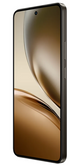
The first thing you’ll notice is the camera module. It’s slightly smaller and slimmer, but the RGB ring stays — a little slice of personality that iQOO refuses to let go of, and I appreciate that commitment to the bit. The phone itself is narrower this time, which surprisingly improves grip more than I expected. You can get the iQOO 15 in two colour variants: Legend and Alpha. The former once again carries the classic white body with the back panel flaunting a Monster Inside tagline. The latter is as subtle a phone can get.

What has improved is the build. The thicker frame and better-rounded corners give the phone a more mature, premium in-hand feel. It feels planted without being bulky. And for a phone packing a 7000mAh battery, the weight distribution is shockingly good.
Verdict
The iQOO 15 feels like a confident step forward. Performance is excellent, and gaming is a clear highlight — heavy titles run smoothly, ray tracing is supported, and sustained performance is solid, though Genshin Impact still needs optimisation to hit consistently high frame rates.
Battery life is outstanding, the display is easily among the best in this segment, and the cameras are reliable even if they don’t chase headline-grabbing results. Wired charging is slightly slower this year, but it isn’t a dealbreaker, and wireless charging finally shows up.
But the price jump is hard to ignore. Going up by roughly ₹15,000 over the previous model pushes it into a bracket where expectations are higher, and competition is tougher. The upgrades do help make a case for the new price, but the gap still feels a bit ambitious for what you’re actually getting.
If you’re interested in buying one, do yourself a favour and borrow a friend with an HDFC, ICICI, or Axis card. The discount brings the base variant down to around ₹65,000. At that price, the iQOO 15 is a genuinely great deal if your priorities are performance and a top-tier display.
If you want better cameras, the easier choice would be the OPPO Find X9 or the Vivo X300.
-
 54,999
 -
 99,999
 -
 1,44,900
 -
 89,998
 -
 46,500
 -
 57,998
 -
 53,989
 -
 1,59,999
 -
 1,29,999
 -
 99,999
-
 70,499
 -
 1,56,900
 -
 1,30,990
 -
 17,084
 -
 16,999
 -
 30,999
 -
 9,999
9,999 -
 79,900
 -
 8,999
8,999 -
 79,999
-
 20,999
 -
 37,999
 -
 25,999
 -
 31,999
 -
 24,999
 -
 10,999
 -
 15,999
 -
 45,999
 -
 19,499
 -
 1,61,999
-1763362932432.svg)

 Continue with Google

