


 Click it and Unblock the Notifications
Exclusive: Why OPPO Put a Fan in a Mainstream Phone

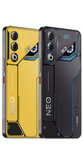
Smartphone makers love their “firsts,” but it’s not often you see a mainstream device with a built-in cooling fan. At the K13 Turbo launch, I sat down with Peter Dohyung Lee, OPPO’s Head of Product Strategy, to find out why they went down this unusual road, and why India was right at the centre of that decision.
When I asked if it was purely an engineering flex or something backed by real-world user data, Lee shared some interesting insights.

“This is based on the user’s need and pain points,” he said, adding that OPPO had been experimenting with active cooling for years. “I think this is the right time to apply this small yet powerful fan without sacrificing battery capacity, durability, or IP68/69 ratings.”
It’s all about the heat
There wasn’t any consumer survey that sealed the deal, Lee admitted. It was more of a convergence of technology readiness and user expectations.
“Users always have needs — unlimited usage, no charging, drop protection, water resistance. The question is whether the manufacturer can provide the right solution without sacrificing those needs.”
And while the fan is also available in China, India’s usage patterns tipped the scales. And this is something I have personally observed among most young users in India. They lean more towards an intensive gaming experience and games like BGMI, Genshin Impact, Wuthering Waves, and Grid Legends offer them a platform. Besides this, long 4K video recording needs are also something many users keep looking at for content creation. So, with all that in mind, thermals are also something that smartphone manufacturers need to look into.

I told him my own experience: gaming takes about half an hour to get a phone noticeably hot, but 4K recording does it even faster. Lee didn’t disagree.
“Heat is the root cause of lag, hangs, battery drain… If we can maintain it well, we can keep the frame rate high, manage battery consumption, and avoid network drops on Wi-Fi or 5G.”
Not just a gamer thing
OPPO has pitched the K13 Turbo as a gaming-friendly phone (first impressions), but Lee insisted the cooling fan is about more than esports bragging rights.
“As you mentioned, young Indian users also enjoy video recording and photography. Continuous shooting also raises heat. This fan doesn’t just help gaming — it helps universal use cases for young Indians.”
The great OPPO identity blur
With the K-series now carrying flagship-grade hardware and AI smarts, I asked how OPPO plans to keep the Reno, Find X, and K lineups distinct beyond just price.

“We have a segmentation map,” Lee explained. “Find series users want a powerful camera, premium design and stability. Reno is for those who travel and want better cameras. Also, outdoor workers or farmers who want durability, big battery, IP rating, and an unbreakable display. K-series is for young, heavy users who enjoy many features.”
While it’s clear on paper, with each series now “good at everything,” those lines may blur further.
From chasing numbers to chasing consistency
The K13 Turbo Pro is claimed to sustain 120fps gaming with only a 1.2°C rise in temperature — at least according to OPPO’s lab results. I asked if that meant a shift away from peak benchmark chest-thumping.
“The more important thing is the sustainable user experience,” Lee said. “Even in marketing, we may show numbers so people understand, but the detail is in how the phone feels compared to the previous generation.”
And, to further prove this point, OPPO has also implemented bypass charging, which powers the phone directly from the charger during intensive use, avoiding extra battery heat.
The battery question
I also brought up something gamers talk about a lot but brands rarely touch — user-replaceable or modular battery packs. Lee’s answer was a polite no for now.
“We developed new battery materials to make a longer life,” he said. “We also innovate our software — smart charging based on user behaviour, bypass charging, game AI engine booster. Hardware itself cannot solve everything.”
According to him, those new materials helped OPPO keep the battery pack size the same while bumping capacity to 7,000mAh even with a cooling fan and triple IP ratings in the mix.
What does this mean?
The K13 Turbo is OPPO’s shot at turning “heat management” into a selling point, not just an engineering detail. It’s an ambitious move for a mainstream phone, especially one launching in markets where users push their devices hard.
Whether it’s a game-changer or a marketing footnote will come down to how well that little fan works when it’s not in a lab — and whether OPPO really sticks to this sustained performance philosophy beyond one product cycle.
-
 54,999
 -
 99,999
 -
 1,44,900
 -
 89,998
 -
 46,500
 -
 57,998
 -
 53,989
 -
 1,59,999
 -
 1,29,999
 -
 99,999
-
 70,499
 -
 1,56,900
 -
 1,30,990
 -
 17,084
 -
 16,999
 -
 30,999
 -
 9,999
9,999 -
 79,900
 -
 8,999
8,999 -
 79,999
-
 20,999
 -
 37,999
 -
 25,999
 -
 31,999
 -
 24,999
 -
 10,999
 -
 15,999
 -
 45,999
 -
 19,499
 -
 1,61,999
-1763362932432.svg)

 Continue with Google

