


 Click it and Unblock the Notifications
Apple Faces Legal Battle In The UK: Class-Action Lawsuit Accuses iPhone Maker Of Hiding Defective Batteries?

Apple Inc. is facing a class-action lawsuit in the United Kingdom. The iPhone maker has been accused of hiding information about defective batteries.
A mass lawsuit against Apple Inc. has been filed in the UK. The class-action lawsuit essentially drags the company into the same legal wrangles it managed to wriggle out in the US by settling the case. Let's look at the fresh case involving old allegations against Apple Inc. in a new country.
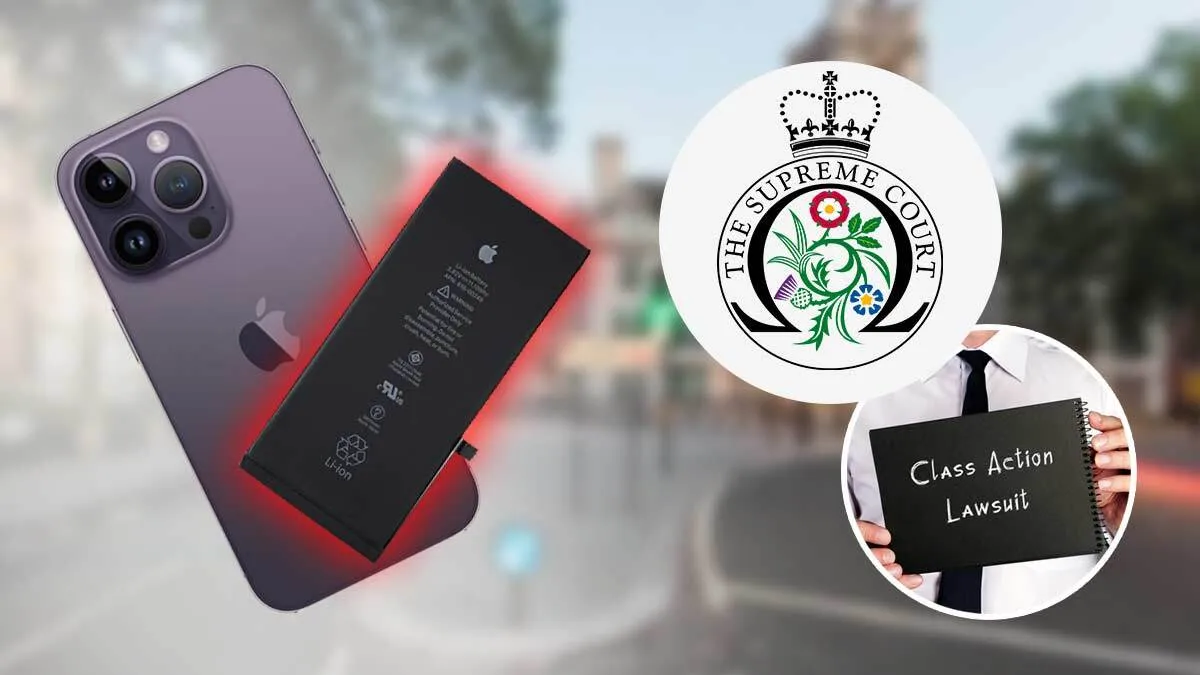
Apple Inc. Faces $2 Billion Lawsuit Because Of Planned Obsolescence?
A class-action lawsuit filed in the UK is asking the judicial system of the country to make the iPhone maker pay up to 1.6 billion pounds (approx. $2 billion) plus interest. At the heart of the lawsuit is an old lawsuit, which was settled, not dismissed.
The mass lawsuit claims Apple used software updates to "throttle" older iPhone models. It further accuses the company of knowingly limiting the performance of millions of iPhones that were sold in the UK.
The lawyers are expected to argue that Apple concealed battery issues in certain phone models. Incidentally, the legal team behind the new class-action lawsuit appears to be referring to the one that was filed in the US.
Back in 2020, Apple settled a class-action lawsuit and a regulatory action by US states over iPhone battery issues. The legal team battling Apple Inc. in the UK is confident presumably because the iPhone maker did not deny or fight these allegations outright.
Back when Apple was facing a lawsuit in America, the company's lawyers had attempted to downplay the techniques, which were later dubbed to be "Planned Obsolescence", wherein the performance of the older iPhone devices was intentionally downgraded to protect their internal batteries from thermal overruns.
Apple Inc. Denies Misleading Consumers But Had Throttled Performance Of iPhones
London's Competition Appeal Tribunal is yet to certify the case and allow it to proceed towards a trial. In other words, Apple is yet to face a UK court.
Apple maintains that its controversial "Power Management" update, introduced in 2017, reduced the performance of an iPhone 6 by an average of just 10 percent. But the company acknowledged that a small percentage of iPhone 6s models had defective batteries, and stressed that it offered free battery replacements for those.
Apple has always denied misleading its customers. However, the company issued a public apology in 2017. Apple offered cheaper battery replacements to affected customers.
Apple Inc. may have taken remedial steps to boost transparency about the battery health of iPhone devices. However, the company did try to address the issue secretly, and its steps did affect the performance of the iOS smartphones. Perhaps those who filed the mass lawsuit in the UK are hoping Apple Inc. may try and settle here as well.
For the time being, Apple has denied the accusations. The company has branded the case as "baseless". Apple's lawyer, David Wolfson, reportedly pointed out that the lawsuit claims that "not all batteries could deliver the peak power demanded in all circumstances at all times." These are facts, and the circumstances, are common to all battery-powered devices, he said.
-
 1,29,999
 -
 22,999
 -
 64,999
 -
 99,999
 -
 29,999
 -
 39,999
 -
-
 63,999
 -
 1,56,900
 -
 96,949

-
 1,39,900
 -
 1,29,900
 -
 79,900
 -
 65,900
 -
 12,999
 -
96,949
-
 16,499
 -
 38,999
 -
 30,700
 -
 49,999
-
 19,999
 -
 17,970
 -
 21,999
 -
 13,474
 -
 18,999
 -
 22,999
 -
 19,999
 -
 17,999
 -
 26,999
 -
 5,999
5,999
-1763362932432.svg)

 Continue with Google

